The short answer: For a standard, floor-length mermaid gown with a moderate knee-level flare, you will need 4 to 5 yards of 60-inch wide fabric (or 5 to 6 yards of 45-inch wide fabric). However, if your design features dramatic godet inserts, an extended cathedral train, voluminous statement sleeves, or directional lace motifs, your yardage can range from 6 to 8 yards or more.
The mermaid silhouette is one of the most glamorous, iconic cuts in bridal couture, red-carpet dressing, and Nigerian owambe celebrations. Because it hugs the body tightly from the bust through the waist and hips before dramatically flaring outward around the knees, cutting a mermaid gown requires strategic fabric allocation. Calculating the wrong yardage can lead to a deflated flare, seam compromises, or running out of matching dye-lot fabric midway through tailoring.
Quick Yardage Summary at a Glance
- Standard Simple Mermaid Gown (Sleeveless / Moderate Flare, 58-60" Width): 4 to 4.5 yards
- Standard Mermaid Gown (44-45" Width Lace / Ankara / Brocade): 5 to 6 yards
- Mermaid Gown with Fitted Long Sleeves: Add 0.75 to 1.25 yards (Total: 5 to 6 yards)
- Mermaid Gown with Dramatic / Bell / Bishop Sleeves: Add 1.5 to 2.5 yards (Total: 6 to 7.5 yards)
- Mermaid Gown with Sweep / Court Train (1–2 ft): Add 1 to 1.5 yards (Total: 5.5 to 6.5 yards)
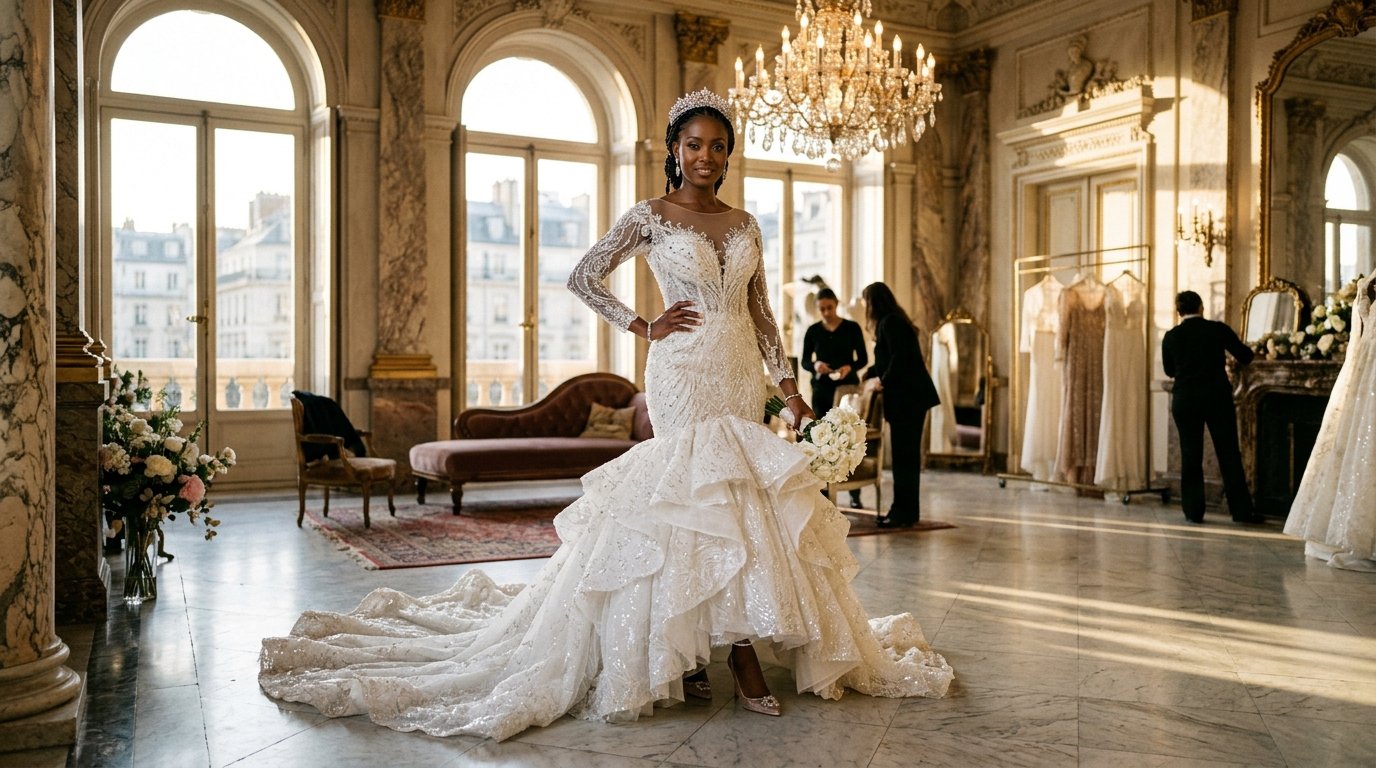
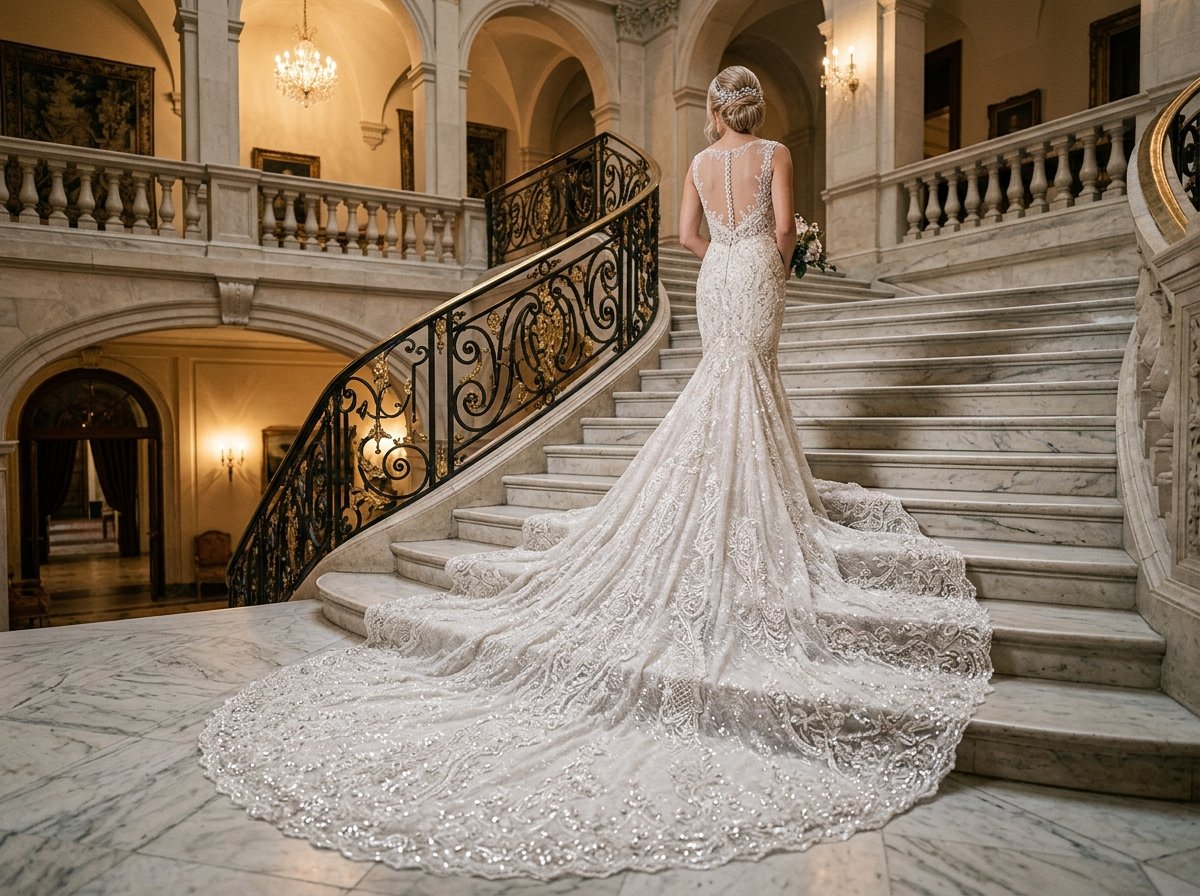
- Mermaid Gown with Dramatic Cathedral Train (4–6+ ft): Add 2.5 to 4 yards (Total: 7.5 to 9+ yards)
- Mermaid Gown with Godets or Extreme Multi-Tier Flounce: 6 to 8 yards
- Plus Size (US 16+ / UK 18+) or Tall Figures (5'9"+ with heels): Add 1 to 1.5 yards buffer
- Lining & Structural Underlay (Duchess Satin / Crepe): 3.5 to 5 yards
The Anatomy of a Mermaid Gown: Why Yardage Changes
To understand why yardage estimates vary, you have to look at the three distinct architectural zones of a mermaid gown: the fitted bodice/torso, the flare transition point, and the skirt circumference.
The upper section (bust down to knee) is cut into fitted vertical panels—typically 6 to 8 princess-seam panels for a contoured hourglass silhouette. This part consumes relatively little fabric width. The real yardage multiplier is the lower flare. A subtle trumpet flare might only require a quarter-circle or gentle triangular panel extension, while a full red-carpet mermaid flounce requires half-circle or full-circle skirt cuts, multiple inserted godets (triangular wedge panels), or pleated multi-tiered ruffles.
A mermaid gown’s beauty lives in the contrast between its sculpted bodice and its dramatic lower flare. Never skimp on yardage at the bottom—a skimpy flare turns a mermaid gown into a basic pencil skirt.Tomi Adebayo, Darlings Fabric Stylist
Mermaid Gown Yardage Breakdown by Style & Design
Fabric Types and Special Yardage Considerations
Different luxury fabrics behave differently during cutting. Here is how your choice of textile impacts your yardage requirements:
Fabric Type Cheat Sheet
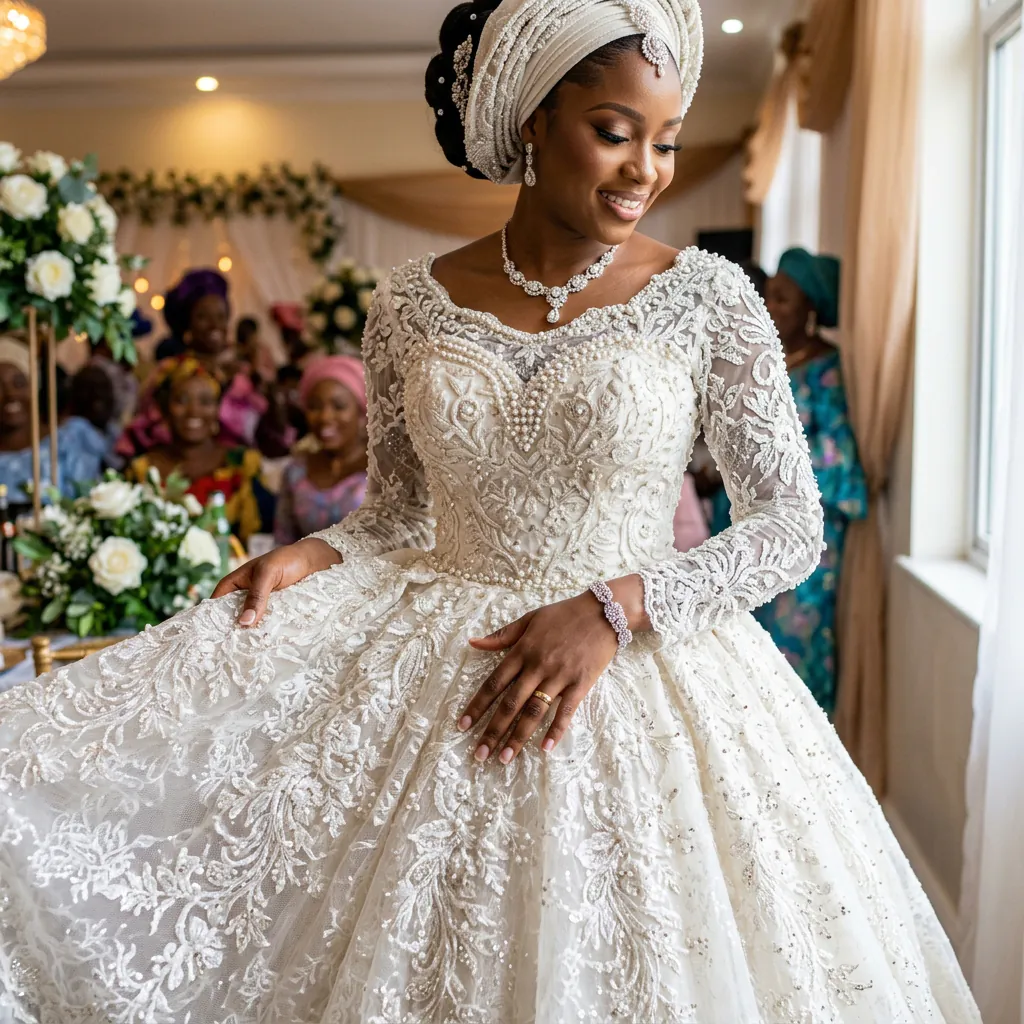
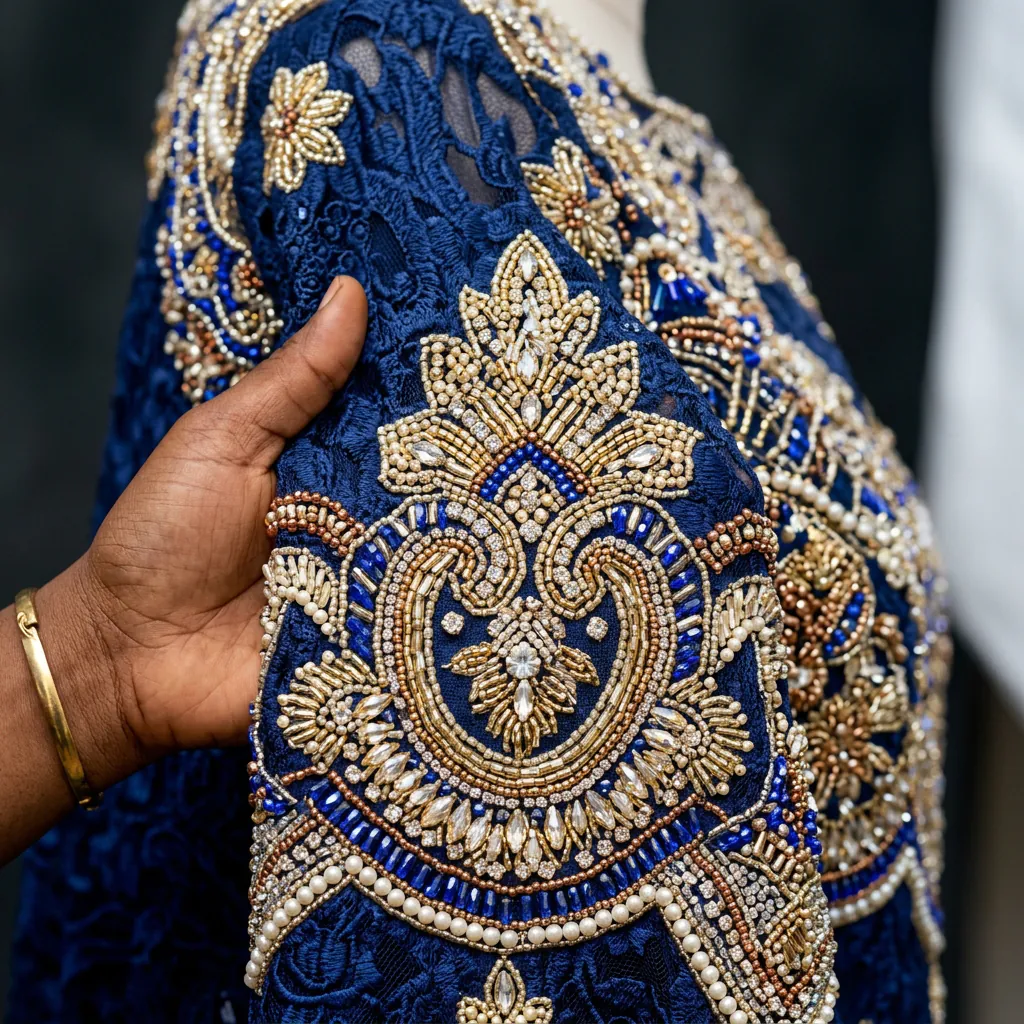
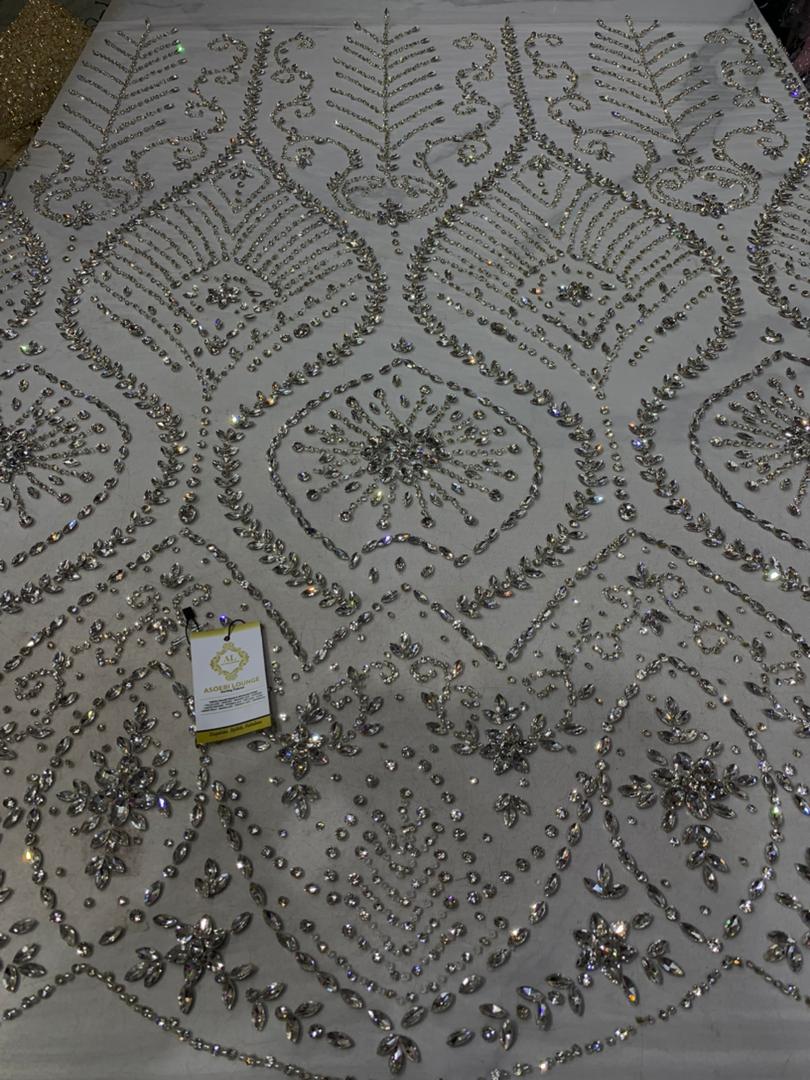
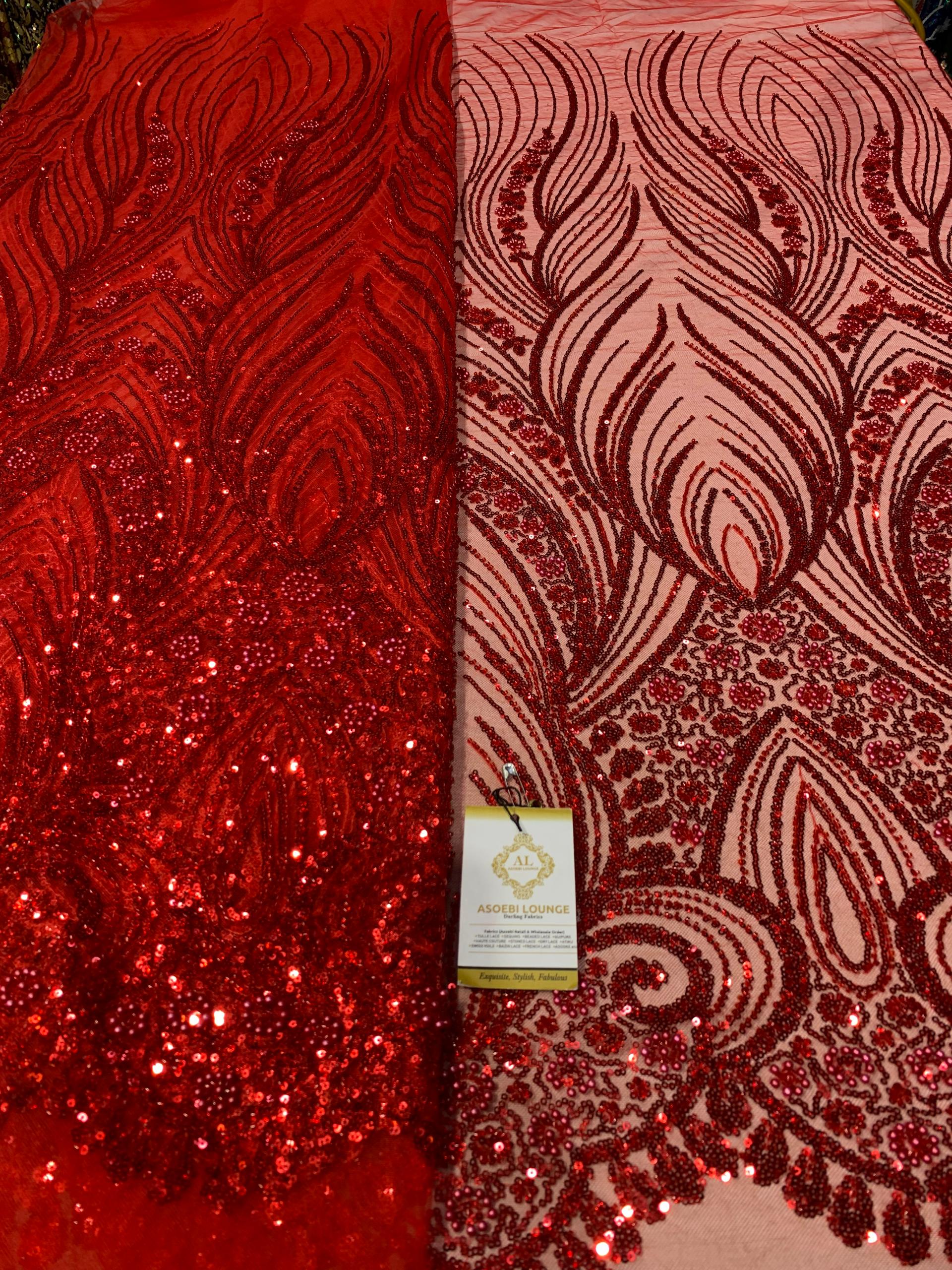
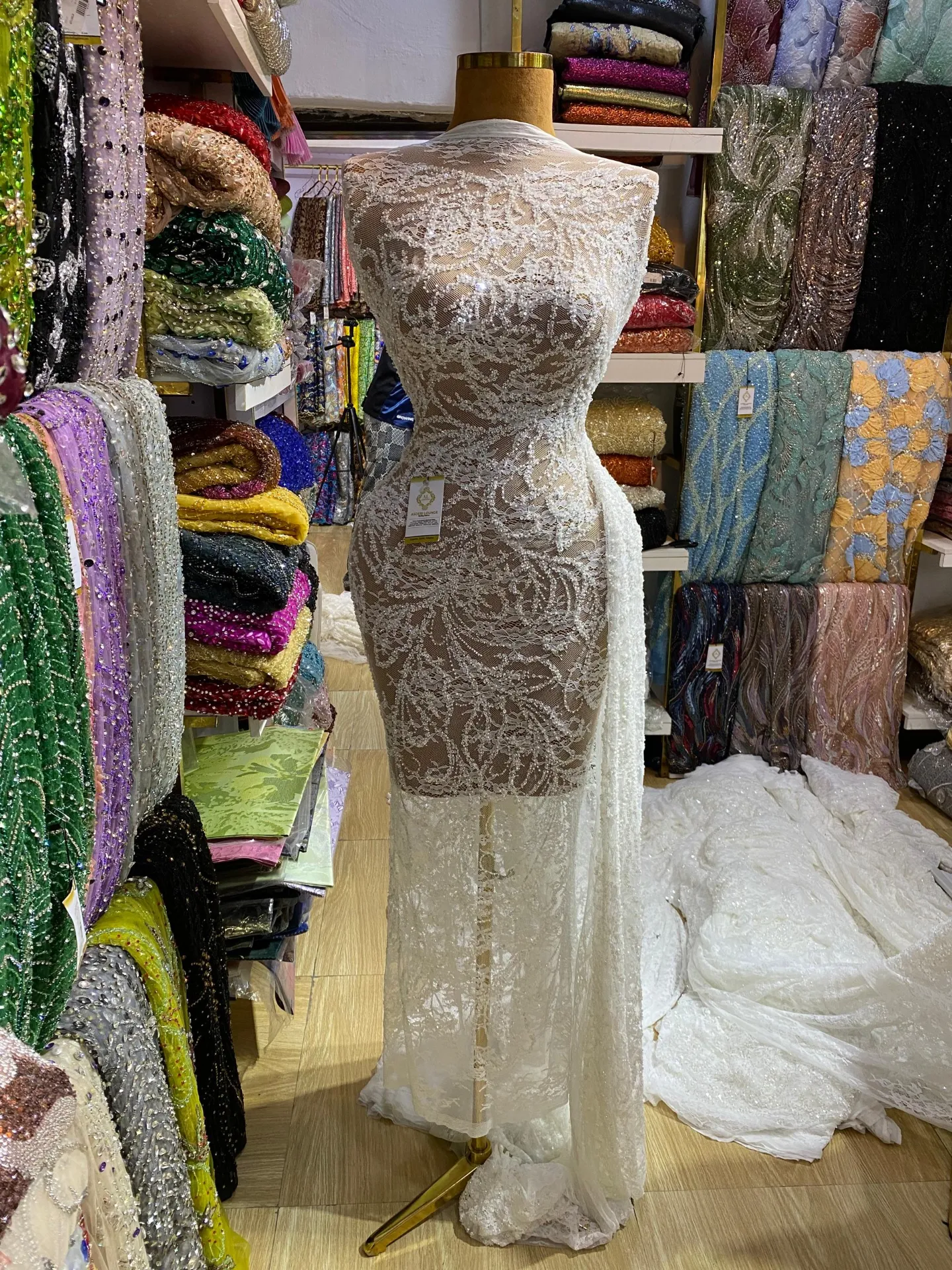
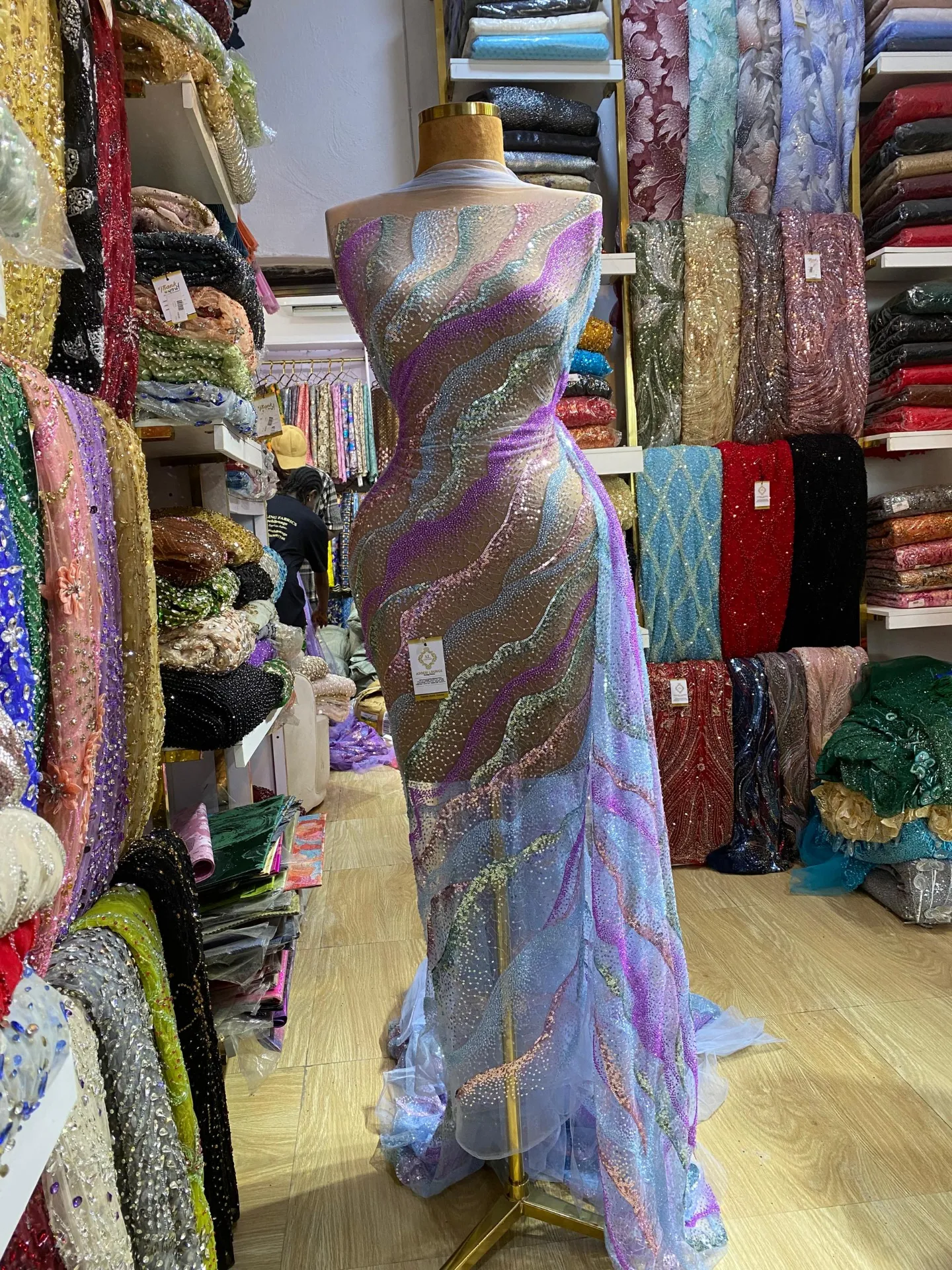
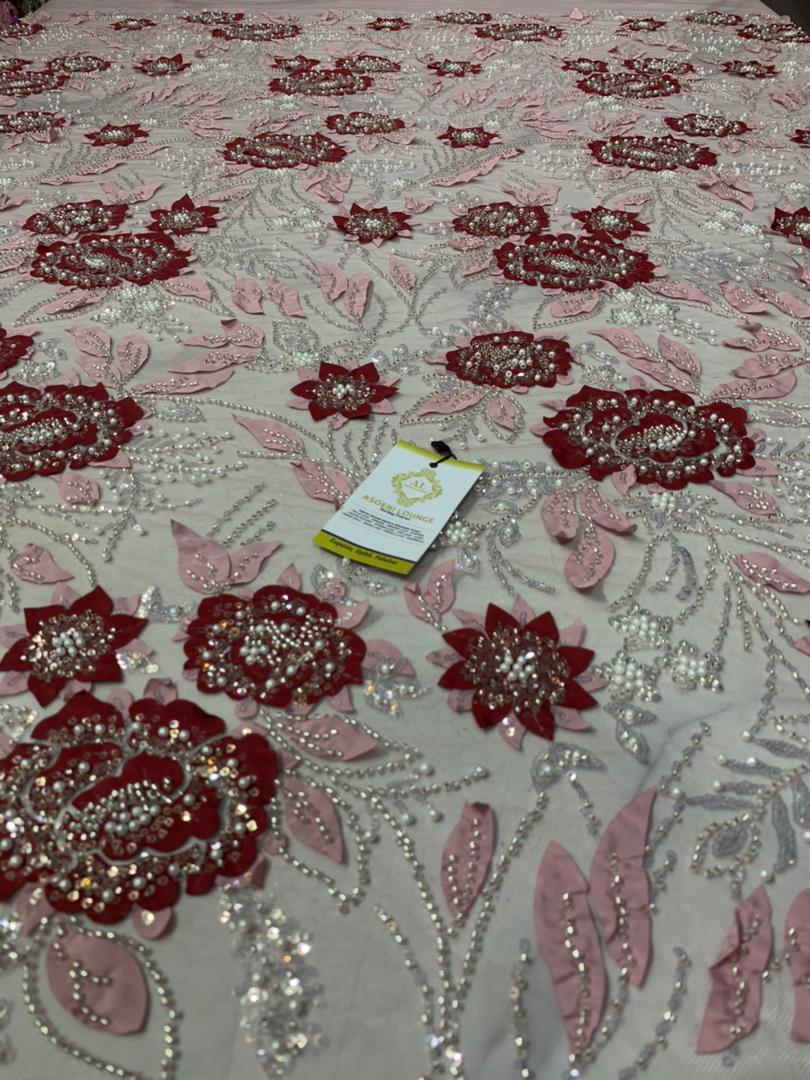
- Beaded & Crystal Lace: Heavily embellished fabrics have directional floral or geometric motifs and scalloped border edges. Tailors must cut around bead patterns and align scallops at the hemline, which creates pattern waste. Always add 0.5 to 1 yard buffer.
- Panel Dress Fabrics: Specifically designed with engineered embroidery that graduates from bodice to flare. Usually purchased in complete 4 to 5-yard panels that are pre-measured for custom gowns.
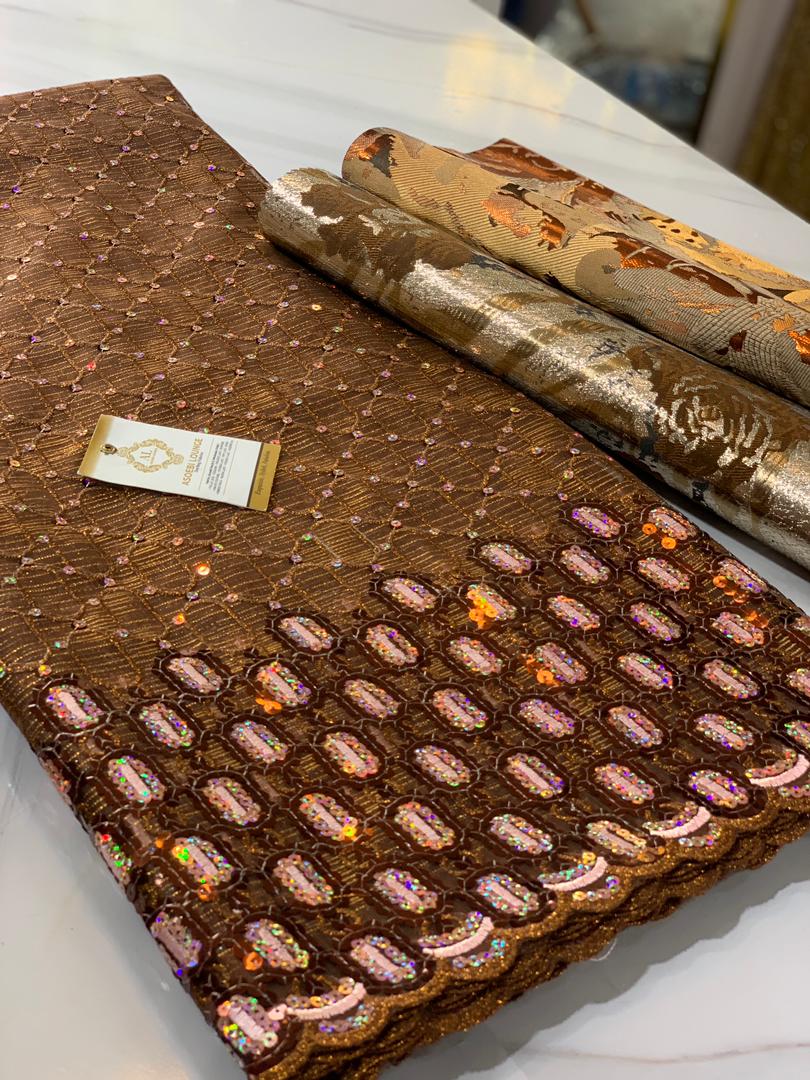
- Duchess Satin & Mikado: Heavyweight, structured fabrics with crisp fold memory. They hold architectural flare beautifully and require standard yardage (4.5 to 5 yards for 60" width).
- Velvet & Directional Nap: Velvet has a distinctive light-reflecting grain (nap). All pattern pieces must be cut in the exact same vertical direction, otherwise the gown will appear two-toned under lights. Add 1 extra yard.
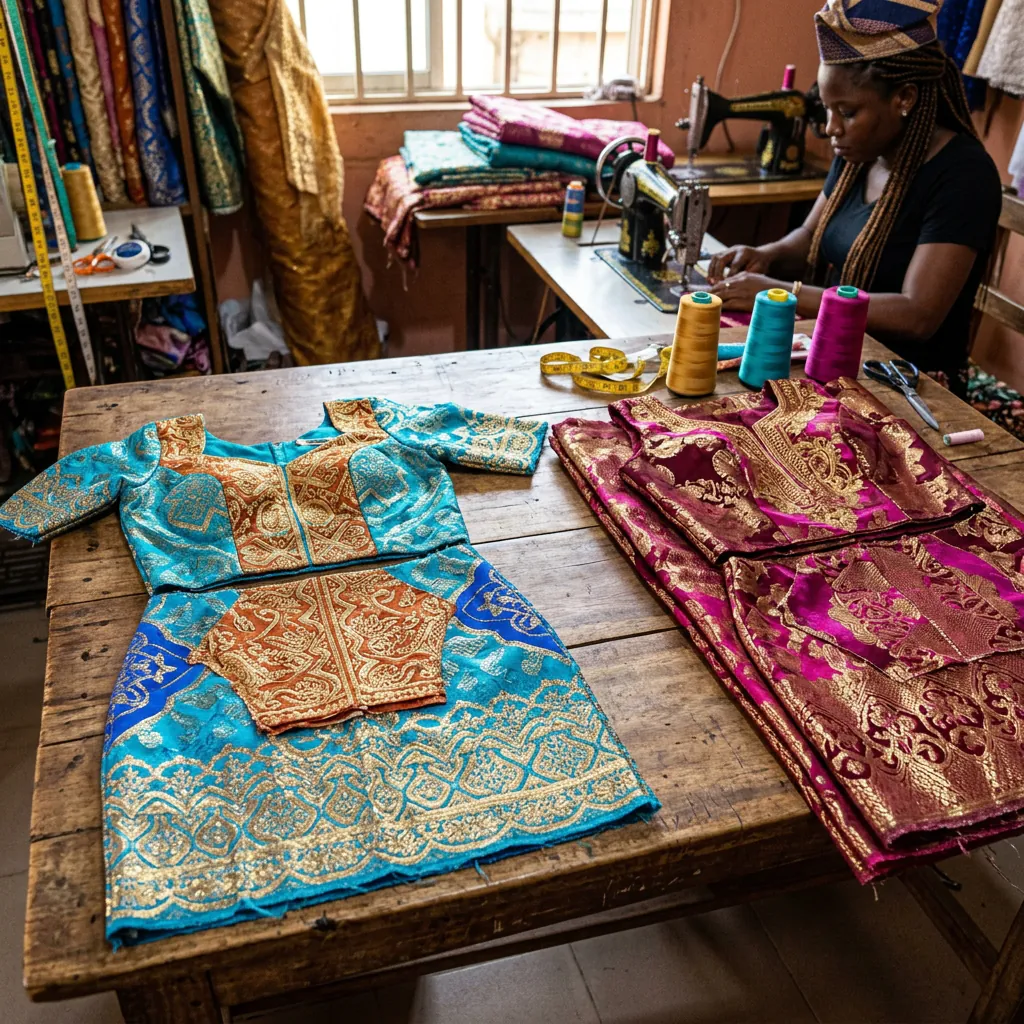
- Ankara & African Wax Prints: Requires meticulous motif matching across princess seams and side seams to keep large circular or geometric designs continuous. Budget 5 to 6 yards.
Explore Premium Fabrics for Mermaid Gowns
Recreate the editorial look with curated Darlings Fabrics picks.
Shop Collection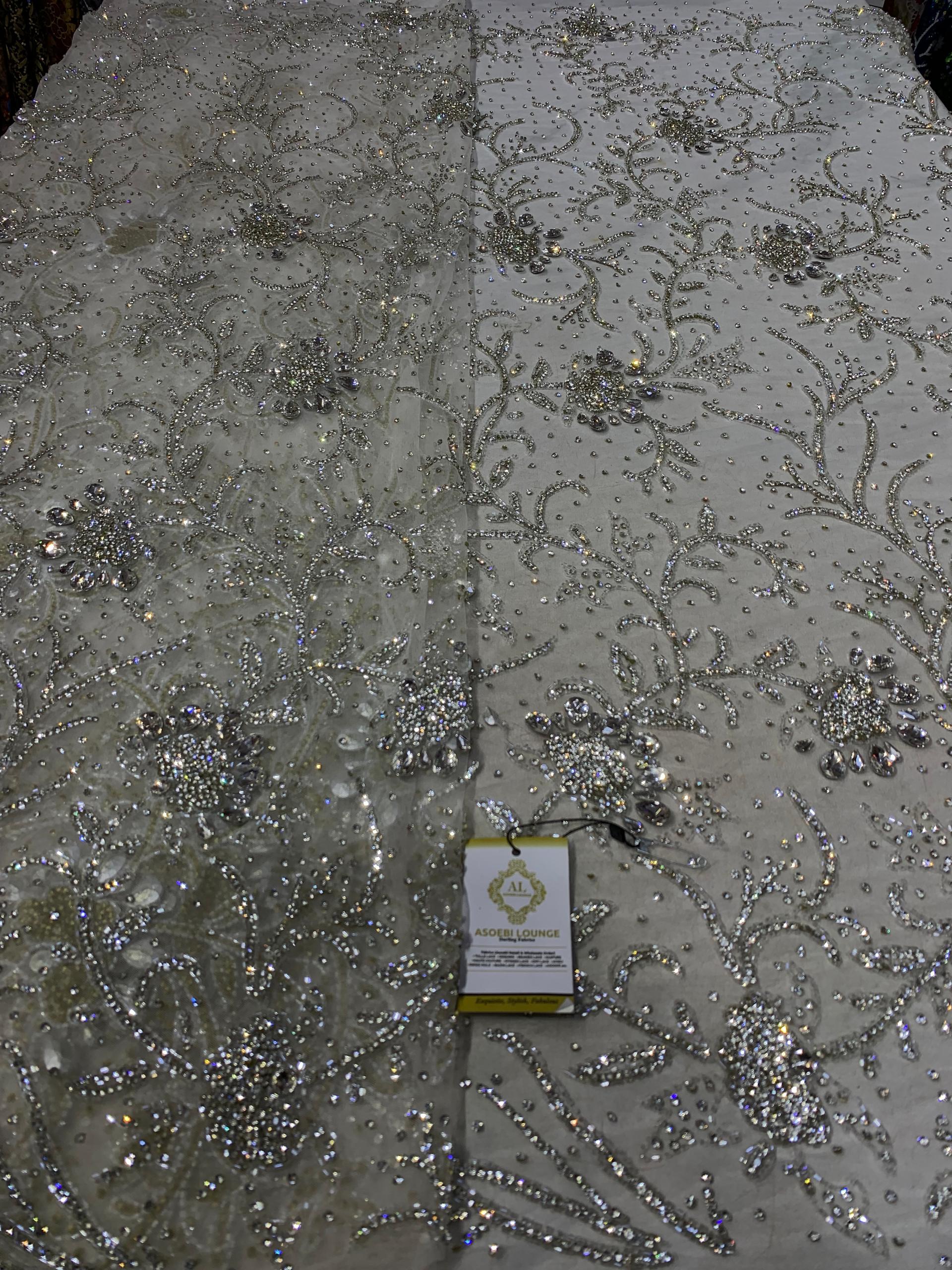
Lining, Netting & Structural Architecture: What Else to Buy
A breathtaking mermaid gown does not rely on the outer fabric alone. The secret behind red-carpet gowns that maintain their structured, rippling flare as you walk is the hidden internal architecture.
Do not forget to budget for these essential supporting materials:
Essential Supporting Materials Checklist
- Base Lining (Duchess Satin / Bridal Poly-Silk / Stretch Crepe): 3.5 to 4.5 yards. Acts as the opaque foundation, prevents see-through, and protects skin from itchy bead backing.
- Illusion Skin-Tone Mesh: 0.75 to 1.5 yards. For sheer plunging necklines, illusion corset waists, sheer back panels, and floating sleeve effects.
- Horsehair Braid (Crin / Hem Braid - 2" to 4" width): 6 to 12 yards. Sewn into the hem of the lining and outer skirt to create dramatic, structured waves that prevent the dress from collapsing between your ankles.
- Hard Netting / Crinoline: 2 to 4 yards. Built inside the lower skirt as an internal trumpet petticoat to push the mermaid flounce outward.
- Rigilene or Plastic Boning & Molded Bra Cups: 3 to 5 yards of boning for built-in corset support, waist snatching, and posture hold.
How Height, Size & Heels Factor into Yardage
One size never fits all when calculating fabric. A gown made for a 5'2" woman wearing kitten heels requires significantly less fabric length than a gown for a 5'10" woman wearing 4-inch stilettos.
Always measure your full shoulder-to-floor length while wearing the exact height of heels you plan to wear on event day. If you have voluptuous hips or a fuller bust, your tailor needs wider panel sweeps across each seam curve to avoid pulling or puckering. When in doubt, adding 1 yard of buffer is a fraction of the cost of ruining a bespoke gown.
Questions to Ask Your Tailor Before Buying Fabric
Take this checklist to your designer
- Where will the flare begin? (Mid-thigh / Above the knee / Below the knee)
- Are we cutting continuous panels or a separate attached circle skirt at the bottom?
- Does this design include a train, and if so, how many inches will it sweep behind me?
- What is the usable width of the lace once selvages and non-embroidered mesh borders are trimmed?
- Do we need extra fabric for matching accessories like a headwrap (gele), purse, or cape?
- What lining fabric and internal hem structure do you recommend for this specific lace weight?
Frequently Asked Questions
How many yards of fabric do I need for a simple mermaid gown?
For a simple, floor-length mermaid gown without sleeves or a train, 4 to 5 yards of 58–60 inch wide fabric (or 5 to 6 yards of 45-inch fabric) is standard for most body types.
Can I sew a mermaid gown with 3 yards of fabric?
3 yards is generally not enough for a full-length mermaid gown on an adult, as the lower flare alone requires significant cutting width. However, 3 yards may be sufficient for a knee-length pencil dress or a mini dress with a small peplum.
How many yards of fabric for a mermaid gown with a long train?
A mermaid gown with a dramatic chapel or cathedral train typically requires 7 to 9 yards of fabric. This allows the back panels to cascade seamlessly without horizontal joining seams across the train.
How much fabric is needed for a plus-size mermaid gown?
For plus-size figures (US 16+ / UK 18+), budget 5.5 to 7 yards for a standard mermaid gown, and 7.5 to 9.5 yards if you desire dramatic sleeves or a sweeping train. The extra yardage accommodates wider pattern curves and princess seam grading.
How many yards of lining do I need for a mermaid dress?
You typically need 3.5 to 4.5 yards of lining fabric (such as duchess satin, bridal satin, or stretch crepe) to fully line the bodice and flared skirt.
What is the difference in fabric needed for a mermaid vs trumpet gown?
A trumpet gown flares earlier (around the mid-thigh), creating a gentler, more gradual triangular silhouette that often requires 0.5 to 1 yard less fabric than a dramatic mermaid gown, which stays skin-tight until below the knee before exploding outward.
Summary: Get Your Yardage Right the First Time
Crafting the ultimate mermaid gown is an art form. By calculating your yardage accurately based on fabric width (45" vs 60"), train length, sleeve drama, and internal horsehair braid structure, you empower your fashion designer to create a flawless, body-sculpting masterpiece that turns heads at every step.
Sources and Further Reading
Patternmaking & bridal couture references
- Threads Magazine: Patternmaking for Fit-and-Flare and Mermaid Silhouettes - Technical guide on drafting godets, flare angles, and hemlines.
- BellaNaija Weddings: Bridal Fashion & Bespoke Reception Gowns - Trend analysis of Nigerian bridal couture and train styles.
- Sewing Pattern Review: Yardage Estimation for Formal Evening Wear - Community standards on fabric consumption and width calculations.