
Read the selling unit beside each website price. Some fabrics are sold per yard, while others are sold as a complete four-yard bundle or another stated cut length. The displayed bundle price covers the whole cut: do not multiply it by four again. Accessories are sold as individual items. Select a colour or option on the product page to confirm its price and availability.
To choose asoebi fabric well, begin with the people who will wear it, not the most dramatic fabric in the showroom. Set a complete budget, define the event mood, confirm the venue and weather, test the fabric against real skin tones, ask a tailor about yardage, and reserve enough material from one batch before collecting payments. A beautiful choice should still feel comfortable, sew predictably and arrive early enough for fittings.
This guide is for brides, grooms, celebrants, family representatives and asoebi coordinators choosing fabric for a wedding, birthday, thanksgiving, funeral or cultural celebration. It gives you a decision process that protects the visual plan without placing avoidable pressure on guests.
The seven-point decision
- Set the full per-person budget before choosing a fabric tier.
- Match the material to the ceremony, venue, weather and expected hours of wear.
- Choose a colour family that works in daylight, indoor light and photographs.
- Inspect the ground fabric, weave, embellishment and reverse side closely.
- Confirm width and yardage with a tailor before collecting orders.
- Reserve one production or dye batch for the full group where possible.
- Work backwards from the event date to create payment, delivery and tailoring deadlines.
How to Choose Asoebi Fabric Without Breaking the Budget
The fabric price is only one part of what each guest will spend. A realistic budget includes the material, lining, gele or cap, tailoring, embellishment, delivery and possible alterations. If the fabric consumes the entire budget, guests may be forced to compromise on construction or withdraw from the group order.
Decide early whether the celebrant will subsidise the fabric, whether accessories are compulsory and whether guests can choose between two tiers. A tiered system can preserve the colour story while giving immediate family, close friends and the wider guest group different price points. The tiers should coordinate rather than compete.
Match the Fabric to the Event, Venue and Role
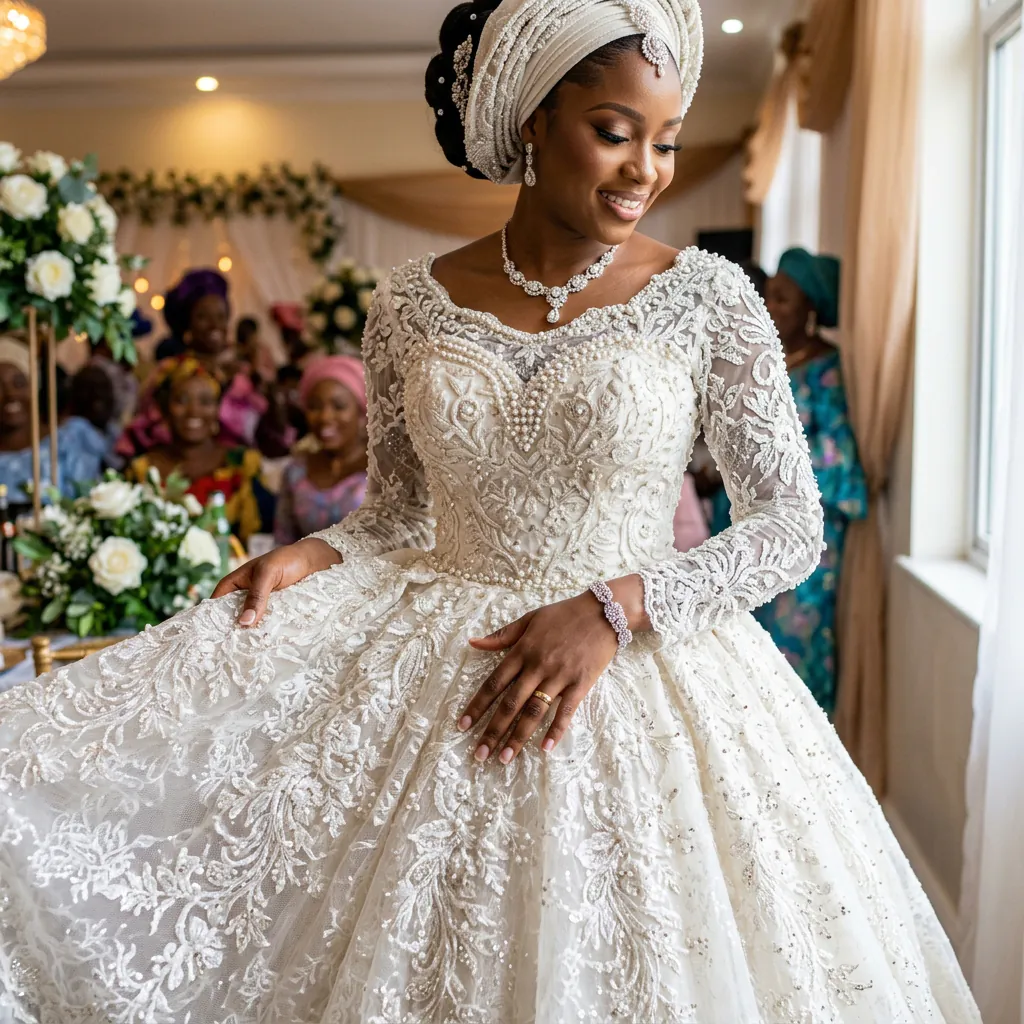
Asoebi for an outdoor afternoon ceremony has different demands from fabric selected for an air-conditioned evening reception. Dense beadwork and heavily embellished net can create a beautiful entrance, but the same weight may feel tiring after several hours of heat, movement and dancing. Softer lace, lighter embroidery or a breathable ground fabric may serve a daytime group better.
The wearer’s role matters too. Parents and celebrants often need a fabric with more structure and ceremonial presence. Bridesmaids and friends may prefer a material that supports varied silhouettes and movement. Older relatives may value softness and manageable weight more than maximum sparkle. Children need a comfortable backing and trims that do not scratch.
Questions to ask before selecting a material
- Will the main photographs be taken outdoors, indoors or at night?
- How many hours are guests expected to wear the outfit?
- Will the group sit, dance, travel or change venues during the event?
- Does the fabric need to support gowns, iro and buba, kaftans or several different styles?
- Can the selected tailor work confidently with the weight and embellishment?
Choose an Asoebi Colour That Works on People and Camera
A colour should be judged on people, not only on a phone screen or folded bolt. View the fabric in natural daylight and indoor light, then place it near several complexions represented in the group. Camera processing can make some colours appear cooler, brighter or flatter, so photograph the sample with a normal phone camera before approving a large order.
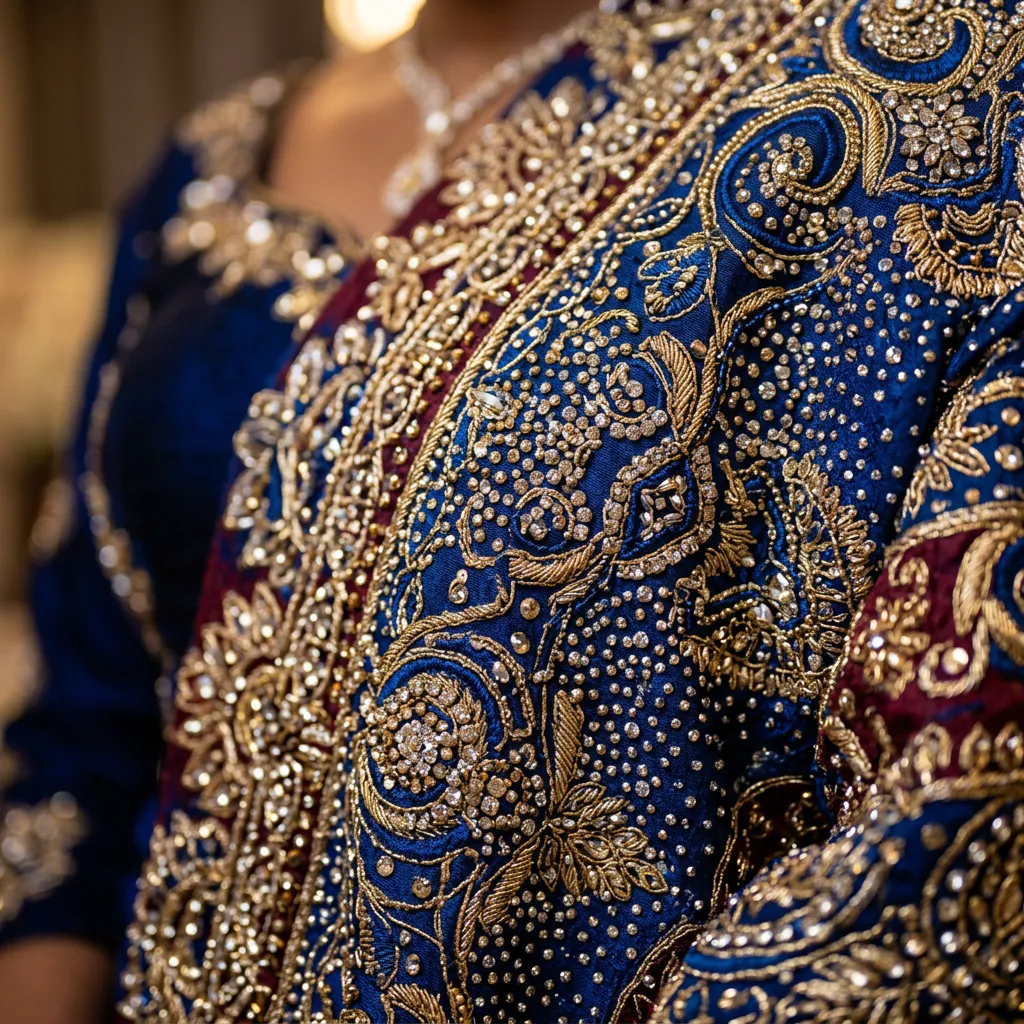
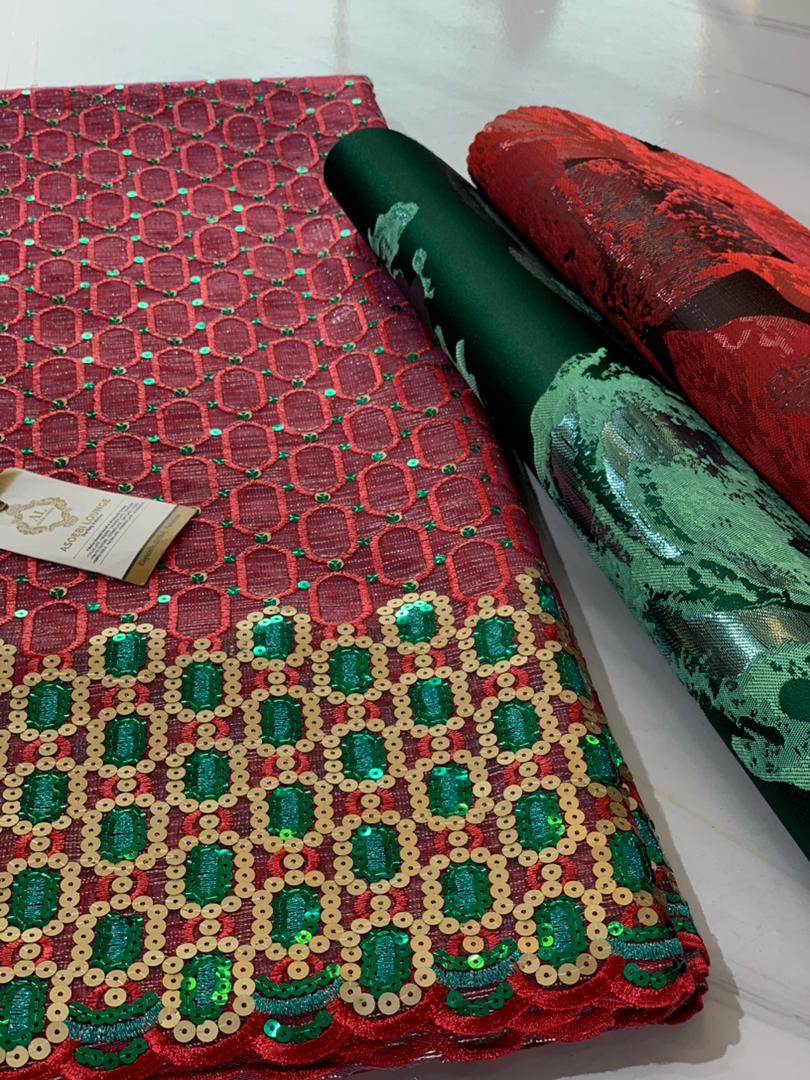
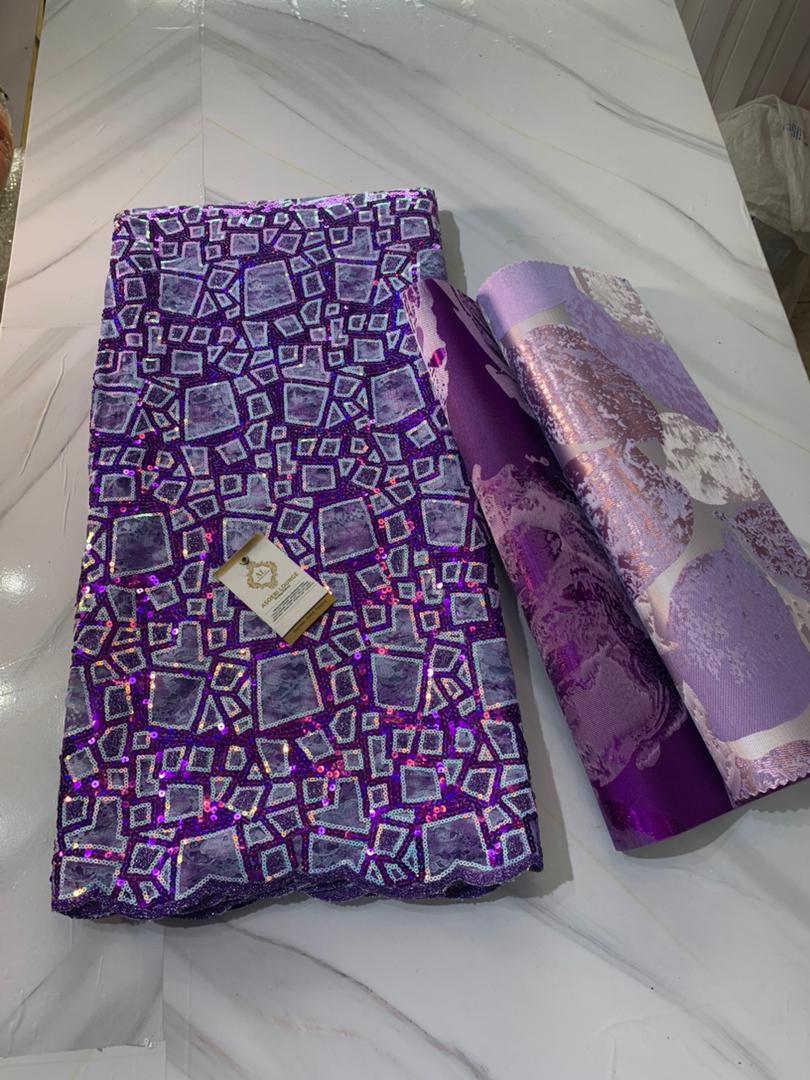
Begin with one anchor colour and one supporting neutral or metallic. Burgundy with champagne, emerald with gold, royal blue with silver, plum with blush and ivory with warm gold are easier to coordinate than palettes containing many equally strong colours. Accessories should repeat an undertone already present in the fabric rather than introduce a new colour at the last minute.
For two families, decide whether both sides will wear the same fabric, different shades of one colour, or complementary colours. Record the final choice with clear daylight photographs and a written description. Names such as wine, champagne, teal and lilac can mean different things to different vendors.
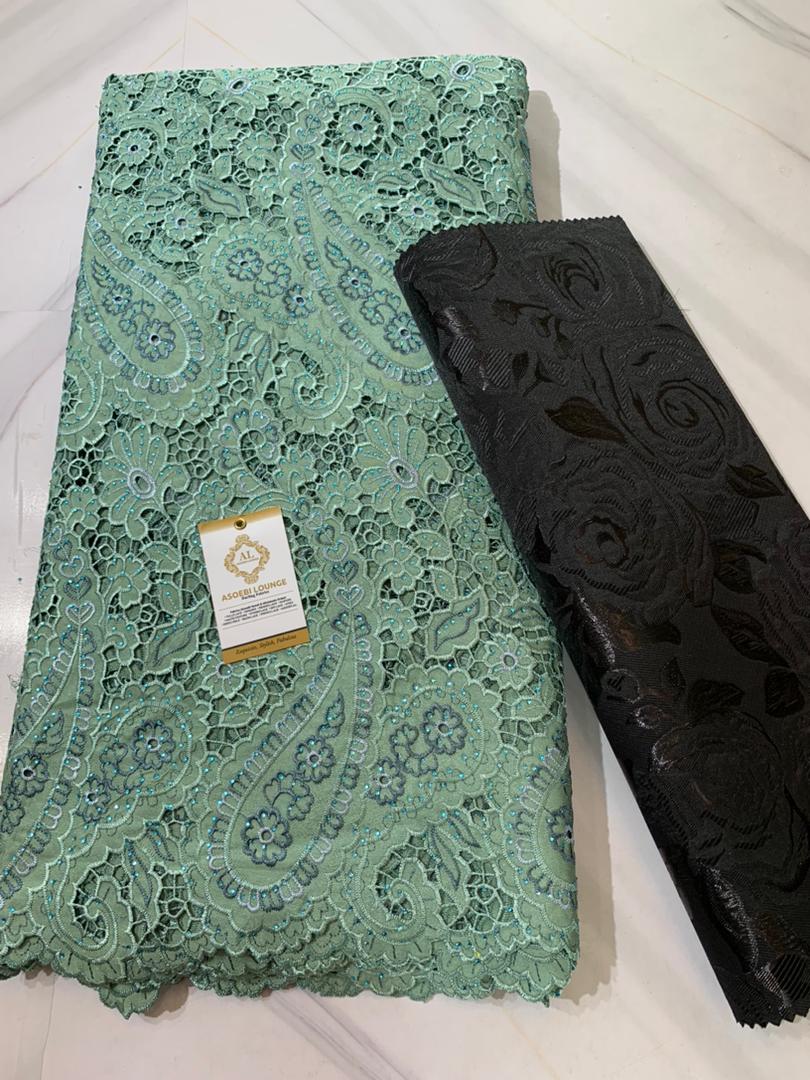
Explore Asoebi and Owanbe Fabrics
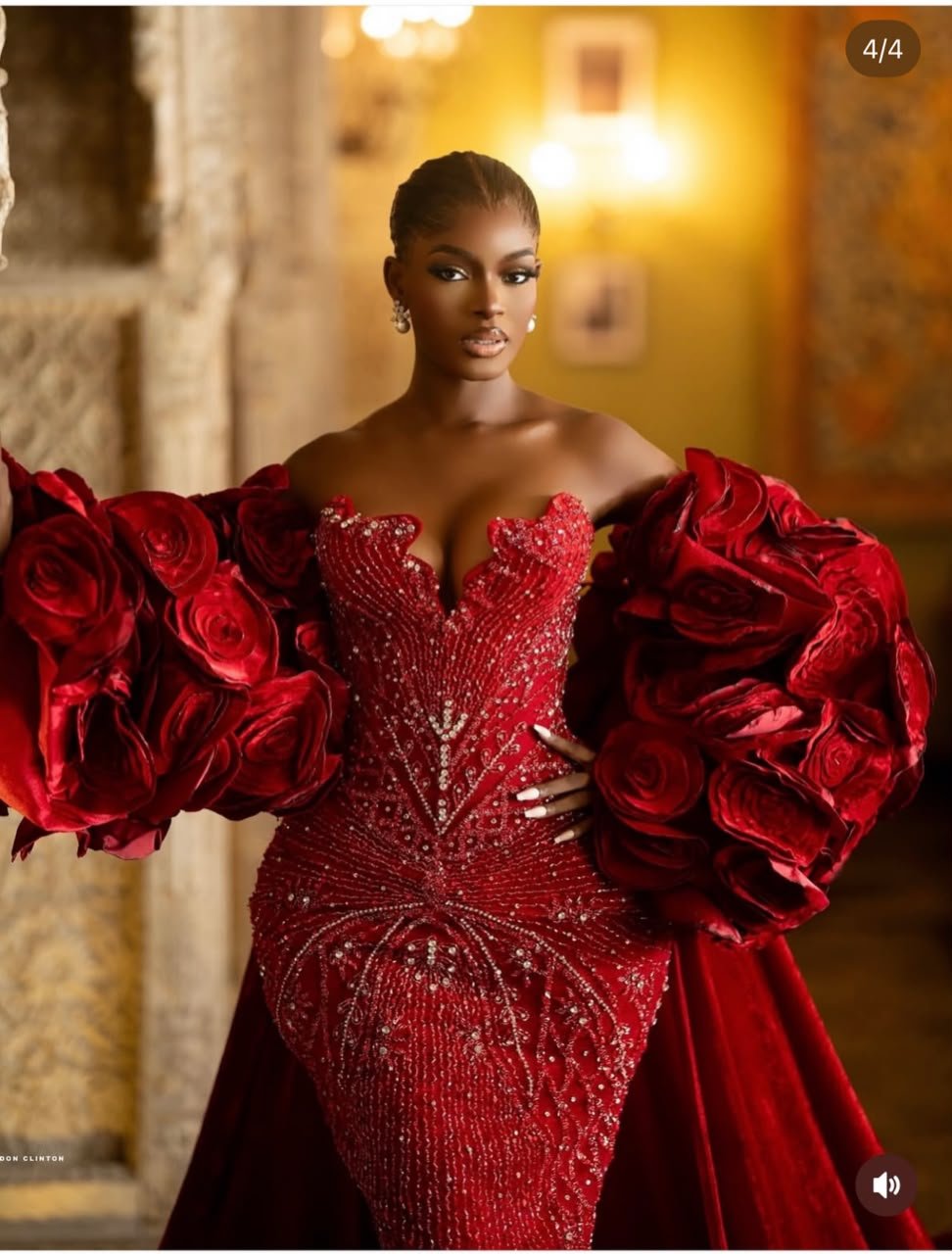
Recreate the editorial look with curated Darlings Fabrics picks.
Shop Collection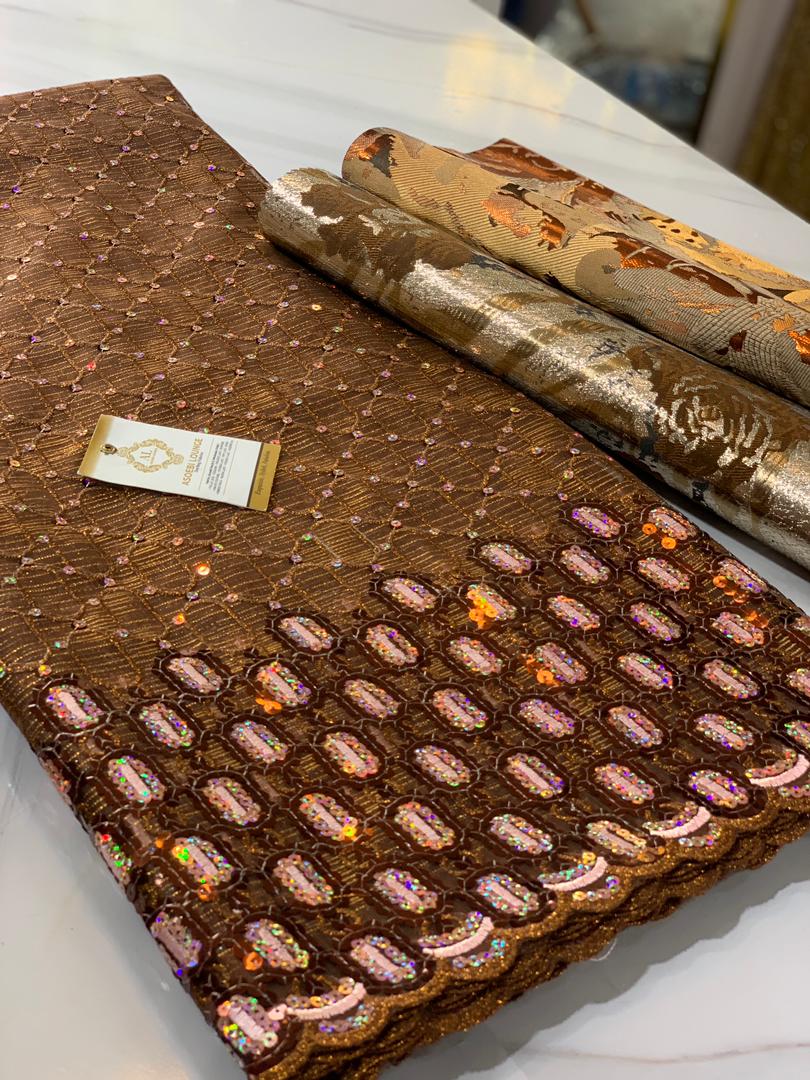
Inspect Quality Beyond the Sparkle
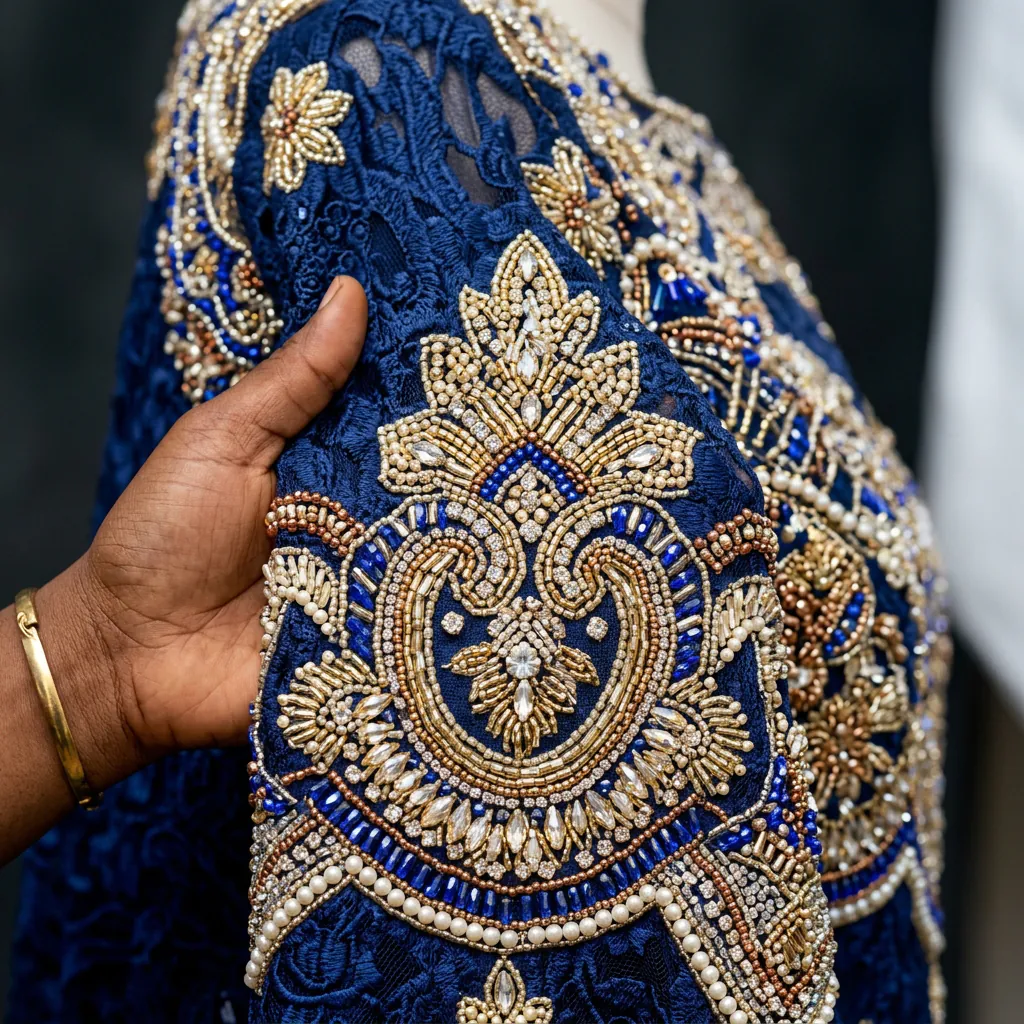
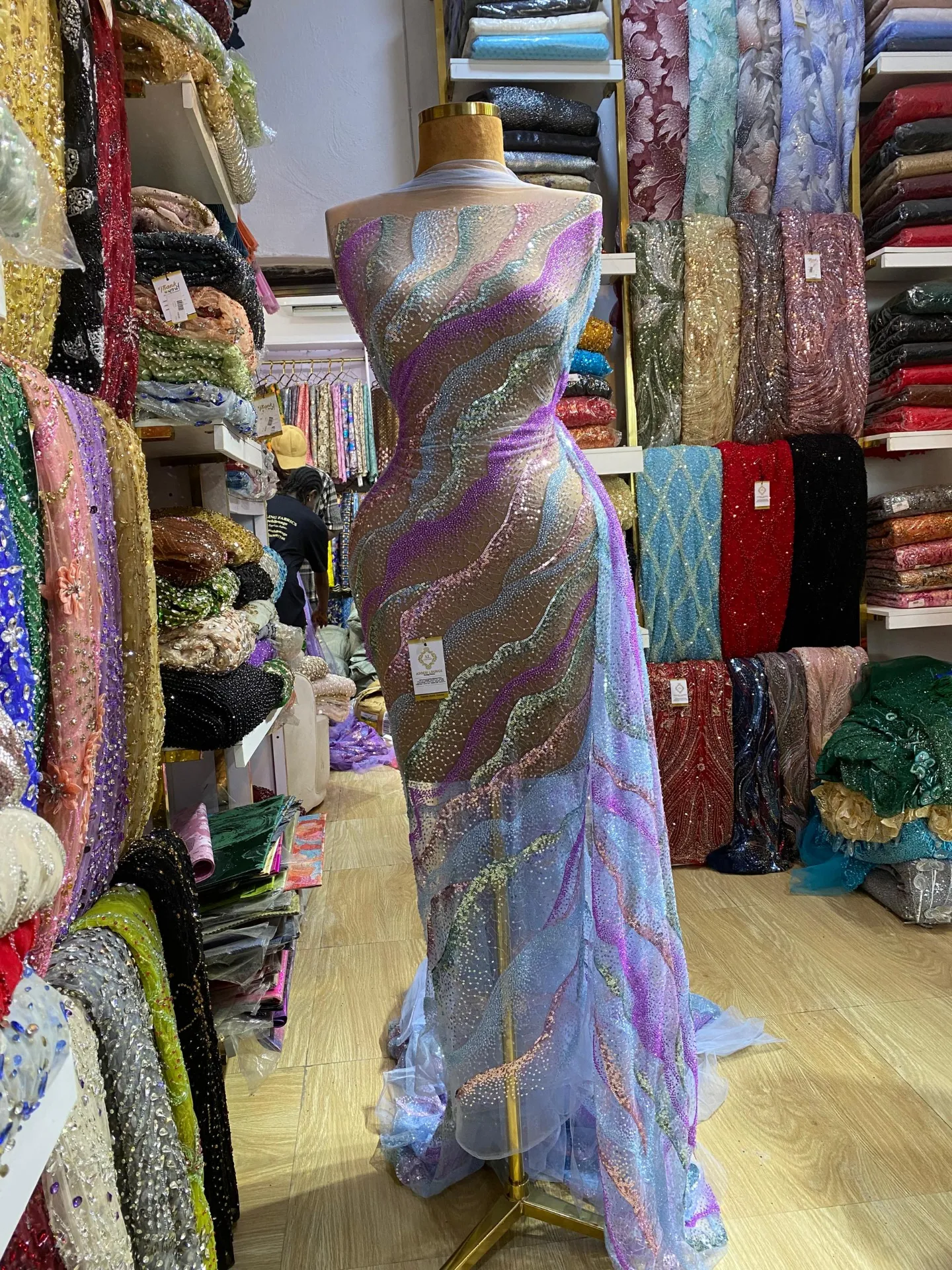
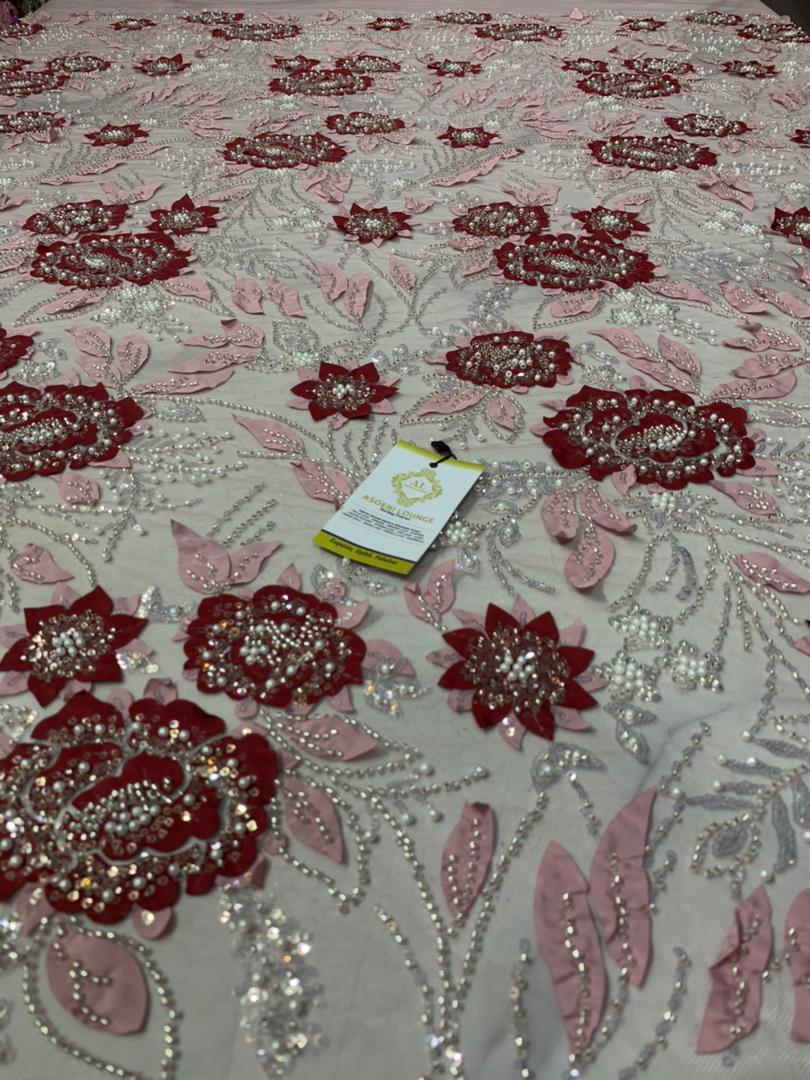
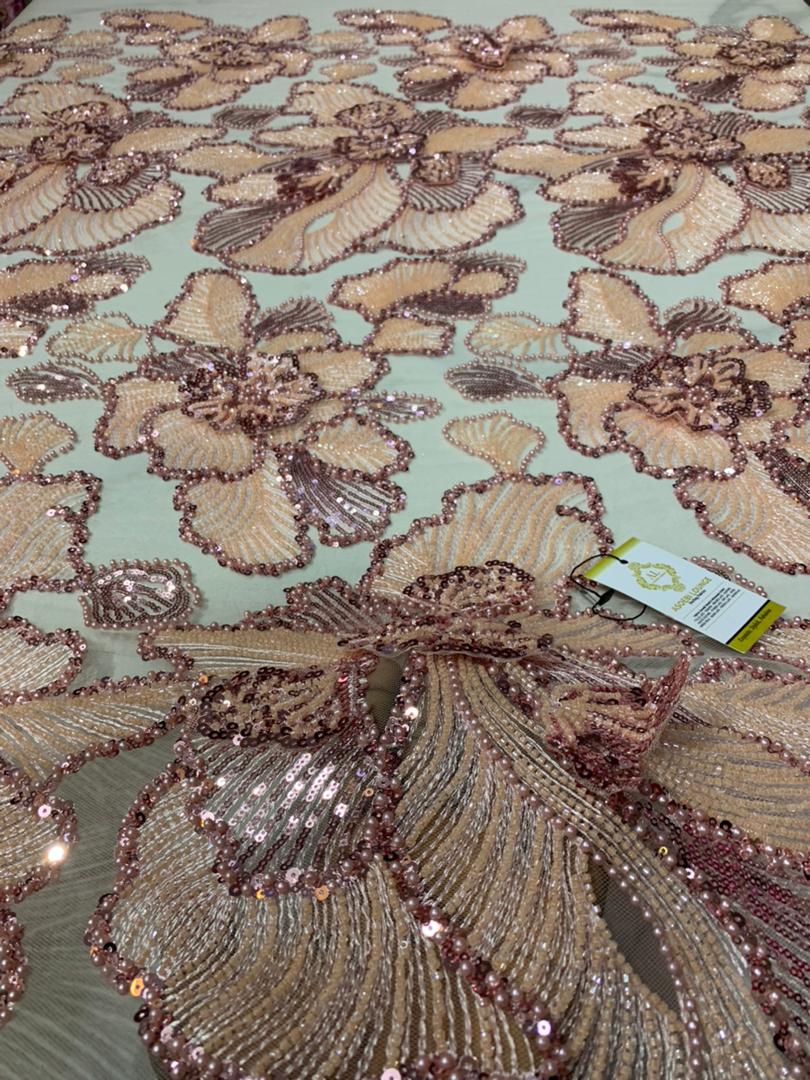
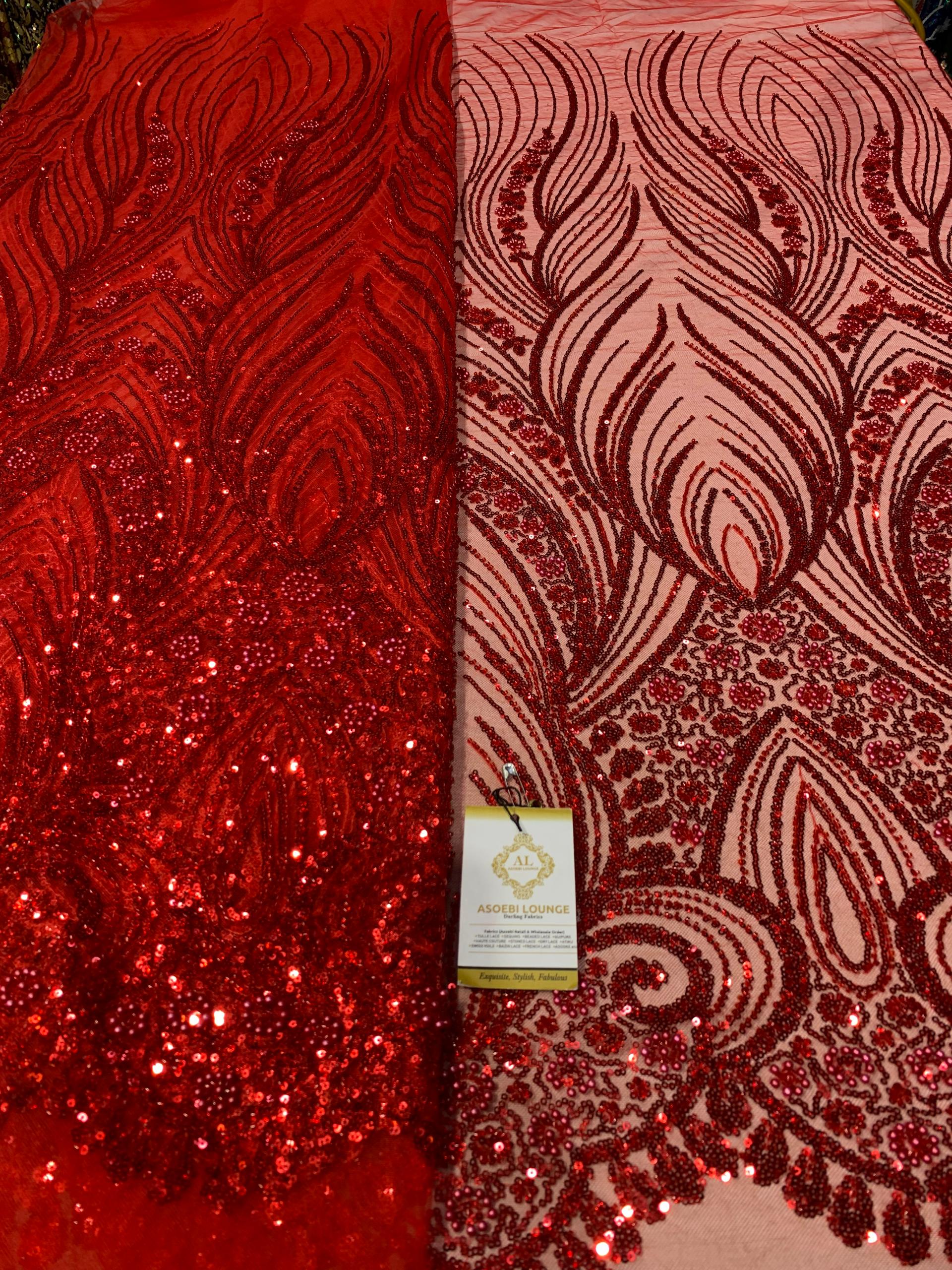
Good fabric selection is a close-up exercise. Hold the material against light to examine the base, then look at the reverse side. The net or weave should feel stable enough for the intended garment. Embroidery should be clean, beads should be attached consistently, and sequins should not release heavily when the sample is handled gently.
Ask whether the design has a border, directional motif or repeated panel. These details change how a tailor places the pattern and may increase the required quantity. Check the usable width, because two fabrics described as five yards may offer different cutting options when one is considerably narrower.
For a group order, consistency matters as much as individual beauty. Confirm how much is available, whether more can be sourced, and whether the additional quantity would come from the same dye lot. Small colour shifts become obvious when a group stands together in photographs.
Confirm Yardage Before Anyone Pays
There is no universal yardage that works for every asoebi style. The correct quantity depends on fabric width, body measurements, garment design, sleeves, train, flare, motif placement and whether matching accessories will be cut from the same material. A fitted dress and a full gown with dramatic sleeves do not use fabric in the same way.
Ask the group to collect two or three likely style references, then let an experienced tailor review the fabric specification. Many women’s occasion styles fall within a four-to-six-yard conversation, but that range is planning guidance rather than a cutting instruction. The tailor should confirm the final quantity for each design.
Plan the Group Order and Delivery Backwards
Asoebi coordination fails when the fabric decision is treated as the final task instead of the first deadline. Begin with the date guests must deliver material to their tailors. Work backwards to allow for dispatch, sorting, payment collection, supplier confirmation and a short problem-solving buffer.
Create one order register containing each guest’s name, phone number, quantity, payment status, delivery method and confirmation number. Nominate one coordinator and one backup. Avoid accepting undocumented verbal orders, because they make it difficult to reconcile money, yardage and parcels later.
A practical coordination checklist
- Confirm group size and minimum order quantity before announcing a price.
- Reserve the fabric before collecting money if stock is limited.
- Give guests a written payment deadline and a separate tailoring deadline.
- Label every cut immediately after measuring it.
- Photograph or record each packaged order before dispatch.
- Keep a small batch-matched reserve until alterations are complete.
- Send care instructions with embellished or delicate materials.
Common Asoebi Fabric Mistakes to Avoid
Avoid these costly shortcuts
- Choosing from an edited social-media image without viewing a real sample or daylight video.
- Announcing a price before confirming stock, width, accessories and delivery charges.
- Selecting a heavy fabric for a long outdoor event without testing comfort.
- Allowing late orders after the original batch has sold out.
- Assuming every guest needs the same yardage regardless of style or measurements.
- Sending fabric too late for fittings and alterations.
- Using unlicensed inspiration photographs as though they are images of the fabric being sold.
Frequently Asked Questions
What is the best fabric for asoebi?
The best asoebi fabric is one that suits the venue, weather, group budget and intended styles. Lace and embellished net offer ceremony impact, while lighter embroidery and softer ground fabrics can improve comfort. Availability from one batch is especially important for coordinated group photographs.
How many yards of asoebi fabric should I buy?
Yardage depends on fabric width, measurements and garment design. Four to six yards is a common planning conversation for many women’s occasion styles, but it is not universal. Show the exact fabric specification and chosen style to your tailor before paying for a final quantity.
How early should asoebi fabric be ordered?
Set the order deadline by working backwards from the tailor’s required delivery date. Allow time for payment collection, stock confirmation, cutting, dispatch, sewing, fittings and alterations. Larger groups and international deliveries need a longer buffer than a small local order.
How do I choose an asoebi colour for different skin tones?
Test the real fabric against several complexions in natural and indoor light. Photograph the sample without filters and examine its undertone. Jewel tones and balanced warm metallics are versatile, but the best choice is the physical shade that supports the people in your specific group.
Why does the same asoebi colour sometimes look different?
Colour can change because of lighting, camera processing, screen settings or separate dye lots. Approve the physical fabric in daylight and reserve enough from one batch. If the order must be replenished later, compare the new material directly with an original retained sample.
How can I make an asoebi group order easier?
Use one coordinator, one order register and written deadlines. Track names, quantities, payments and delivery details; label each cut immediately; and keep proof of dispatch. A small reserve from the same batch can also solve late measurement changes or minor cutting errors.
Choose With the Full Celebration in Mind
Knowing how to choose asoebi fabric means balancing beauty with real-world details. The strongest choice fits the budget, flatters the group, supports several styles, survives the event comfortably and reaches every tailor on time. When those decisions are made before payments begin, the final group looks more intentional and the coordination feels far less stressful.
Resources
Topic inspiration and further reading
- BellaNaija Weddings: Five considerations when choosing Asoebi - A short overview of cost, theme, colour, tradition and timing.
- OloriSuperGal: Aso Ebi Diaries premiere coverage - Cultural and contemporary fashion context around asoebi.
- International Journal of Research and Innovation in Social Science: Asoebi and social identity - Academic context on asoebi participation and group identity.
- University of South Africa: Aso Ebi as a Nigerian social uniform - Long-form research into the history and social role of asoebi.