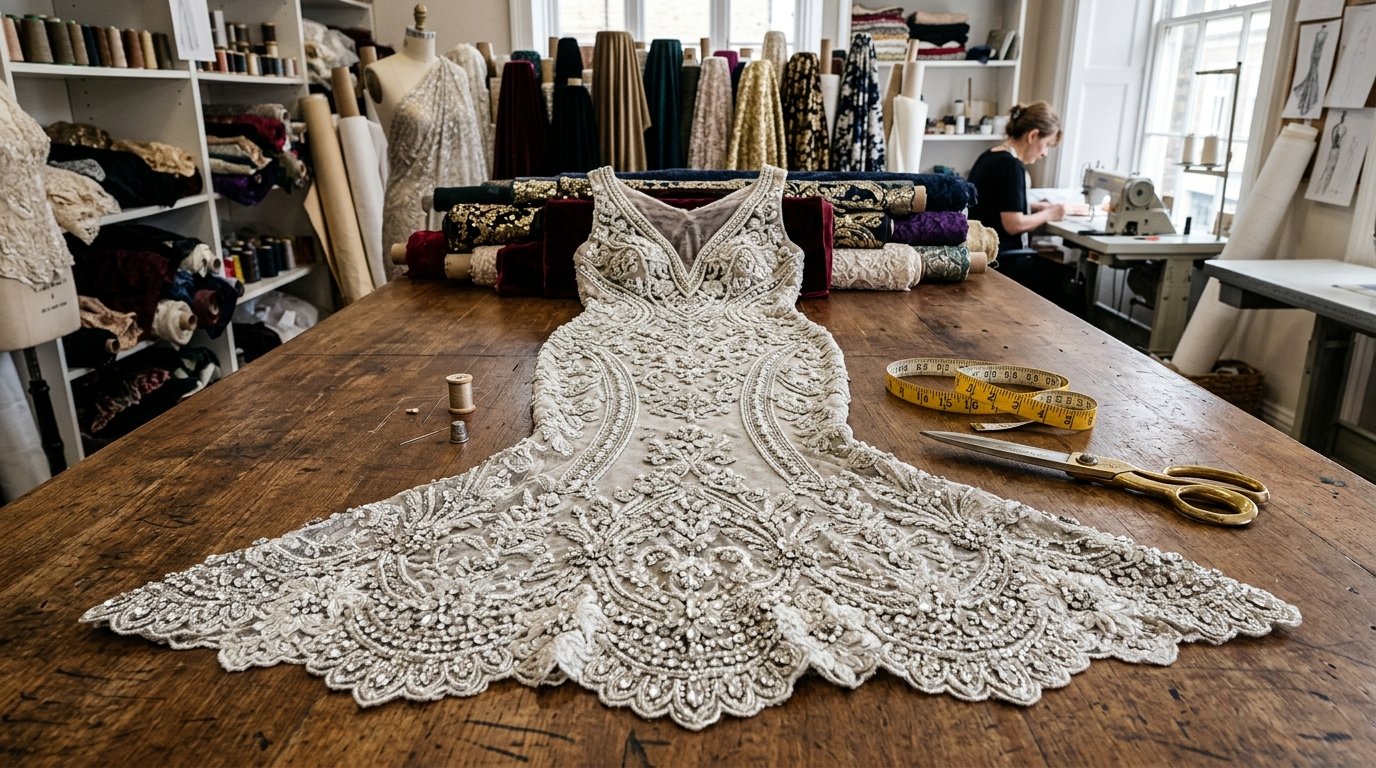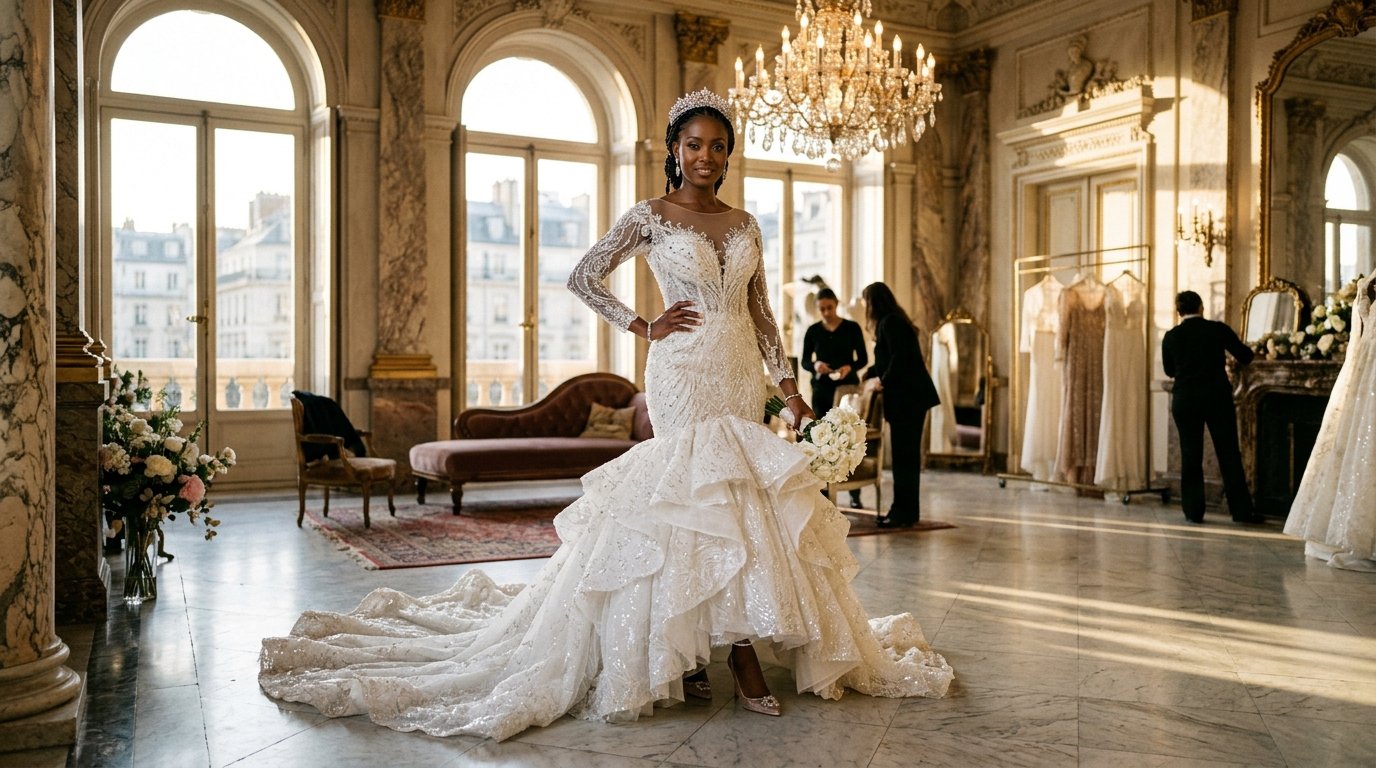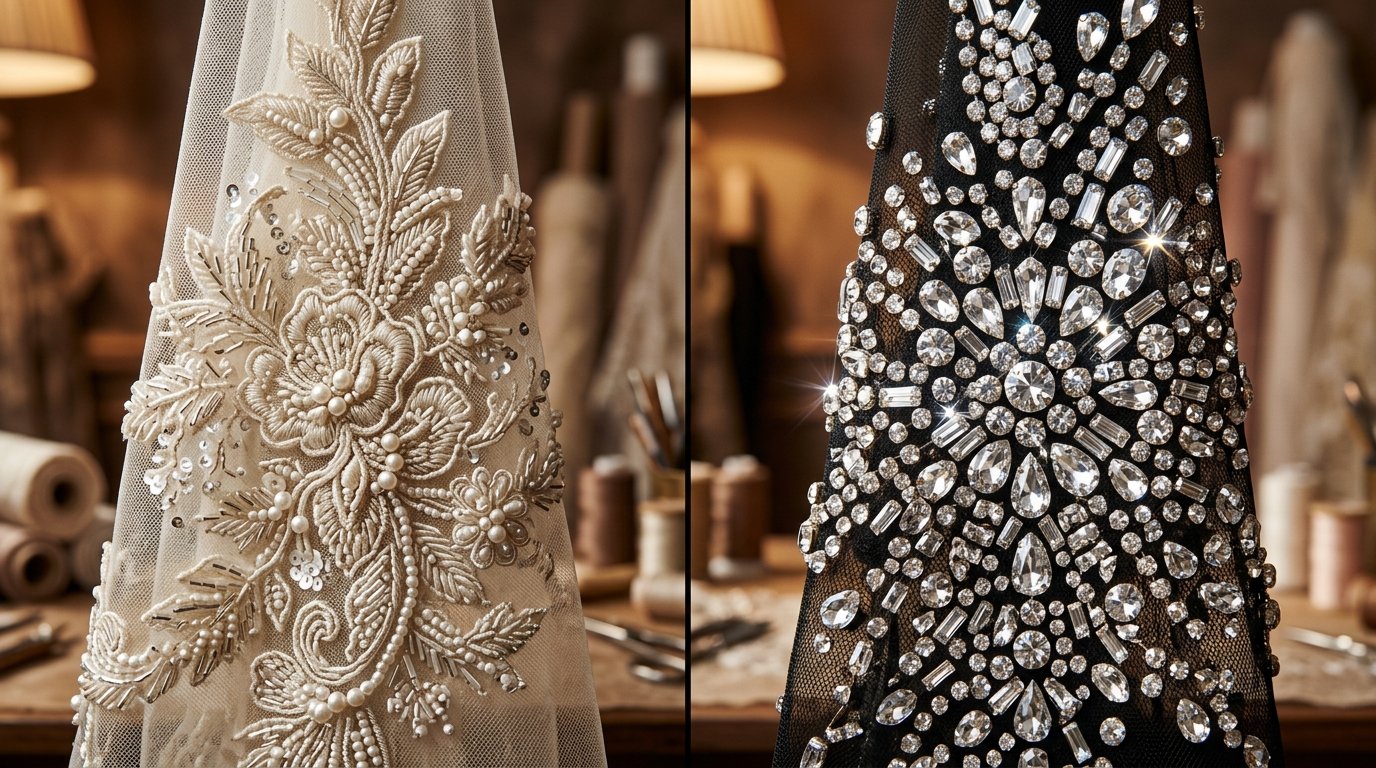
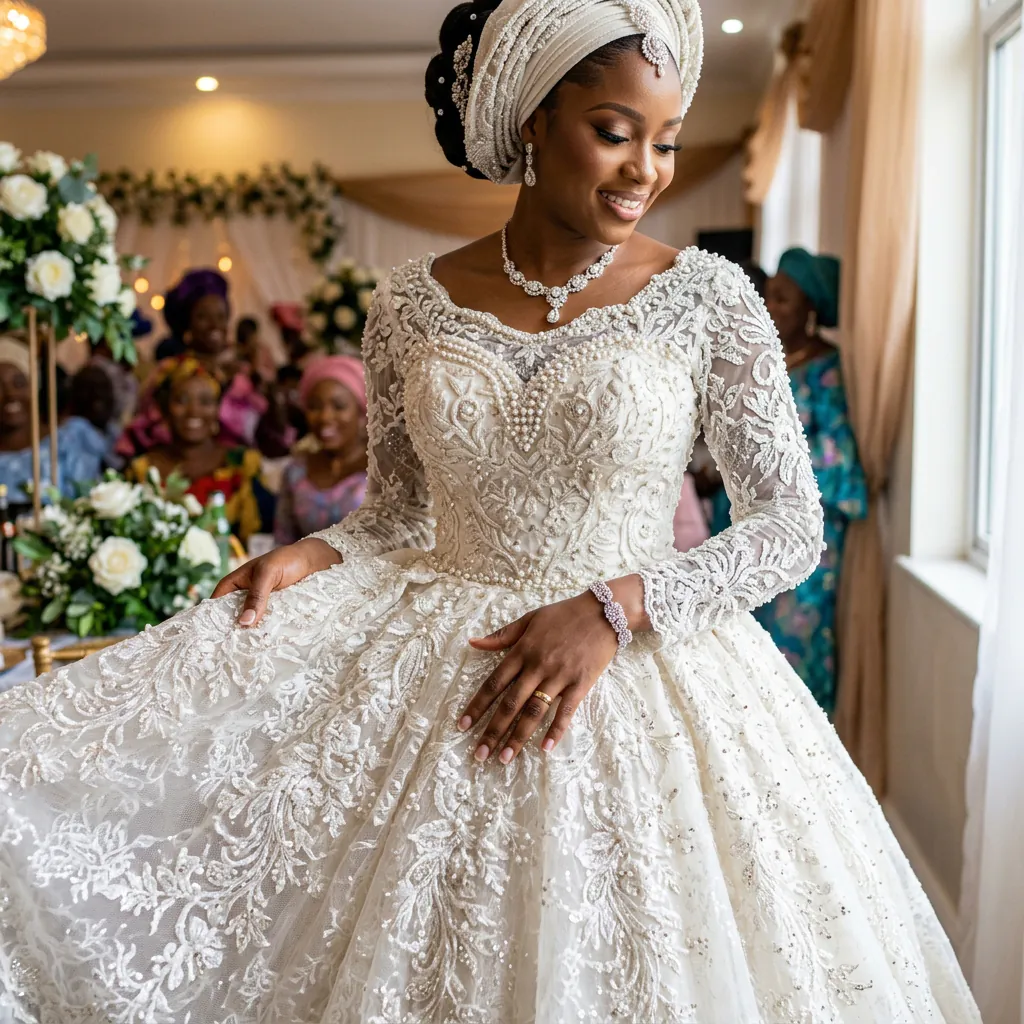
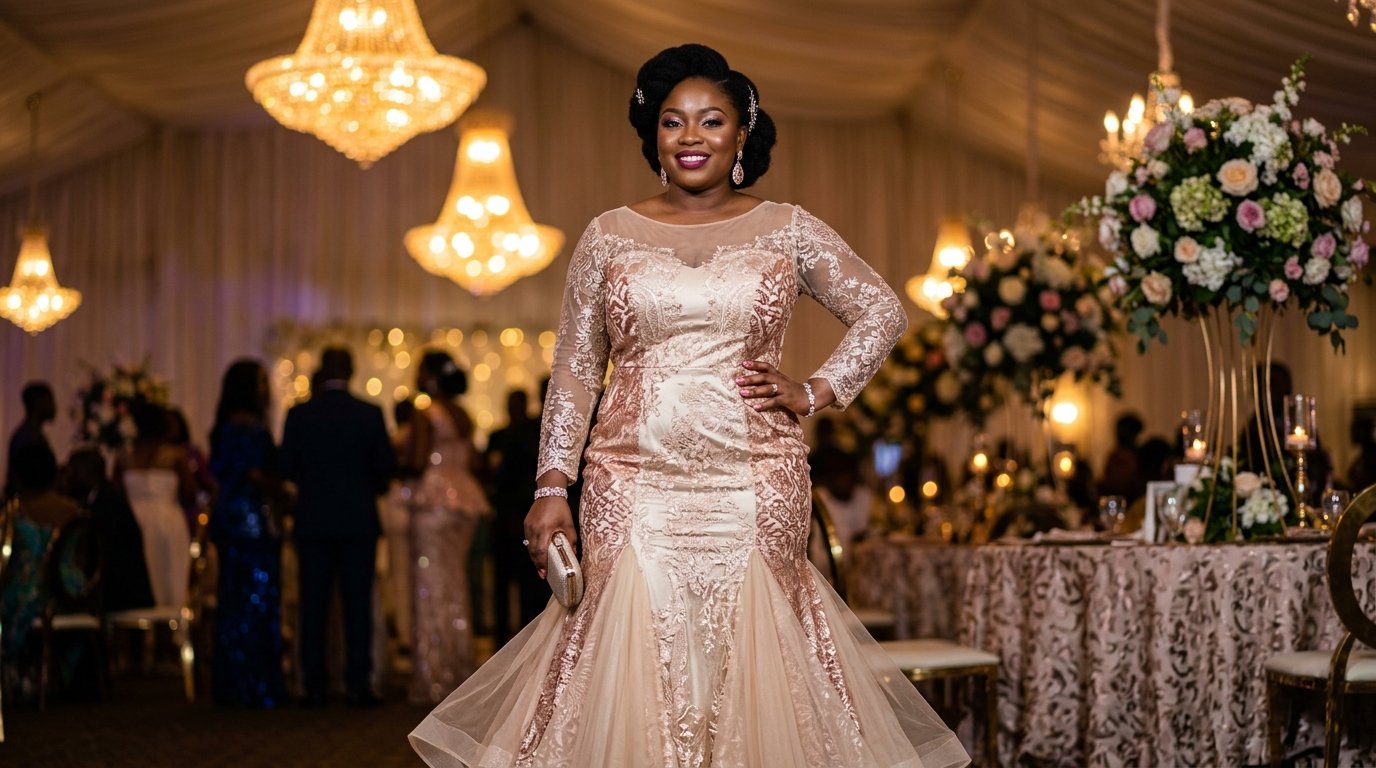
One of the most persistent and frustrating misconceptions in Nigerian fashion is that panel dress fabrics are strictly designed for UK sizes 8 to 12. Curvy women walking through fabric markets in Lagos, Abuja, or Onitsha are frequently steered away by vendors saying: "Aunty, this panel will not close around your hips; just buy all-over lace." This advice is not only outdated—it is flatly incorrect.
Because panel fabrics feature vertically oriented, graduating motifs that draw the gaze upward from the floor toward the collarbone, they are actually among the most slimming, elongating, and flattering textiles a curvy woman can wear. The challenge is never the fabric; the challenge is whether your tailor understands couture pattern grading.
1. The Math of Panel Width vs Curvy Body Measurements
To understand why a panel fits a curvy frame, we must look at the geometry of pattern cutting. A standard luxury panel piece measures 52 to 54 inches in flat width. If your low hip measurement is 44 inches, the front and back skirt can easily be cut side by side or sequentially from the panel width. However, when hip measurements reach 50, 56, or 62 inches, a single width cannot wrap the entire front and back circumference at once.
Amateur tailors attempt to solve this by slicing the central motif down the sides, which ruins the symmetry and makes the embroidery look amputated. Master couturiers, however, use four tested engineering hacks:
Plus-Size Panel Tailoring Strategy by Measurement & Size Tier
| Hip Measurement | UK / US Size | Recommended Tailoring Technique | Extra Fabric Required |
|---|---|---|---|
| 38" – 44" | UK 10 – 14 (US 6 – 10) | Direct Standard Cut: Motif centered on front & back | Standard 1 Panel Piece (2.5y – 3y) |
| 45" – 50" | UK 16 – 18 (US 12 – 14) | Side Godet Insertion: Expands hip sweep without cutting motif | 1.0 yard matching illusion tulle or silk |
| 51" – 56" | UK 20 – 22 (US 16 – 18) | Tuxedo Hourglass Side-Contour: Solid plain fabric on side seams | 1.5 yards Duchess satin or stretch crepe |
| 57" – 64"+ | UK 24 – 28+ (US 20 – 24+) | Dual-Panel Composition: 1 panel for front, 1 panel for back & train | 2 Coordinating Panel Pieces |
2. The 4 Master Couturier Techniques for Curvy Figures
3. Internal Architecture & Foundation Support
For curvy and plus-size silhouettes, the internal engineering of the dress is even more important than the exterior fabric. Embellished panel lace should never bear the structural strain of holding up your body:
Essential Foundation Elements
- Spiral Steel Boning: Plastic boning will warp, crimp, and poke into your skin after two hours of sitting. Insist on spiral steel boning inside the lining channels to hold the corset upright comfortably.
- Internal Waist Stay Ribbon (Grosgrain): A 1.5-inch non-stretch grosgrain ribbon sewn inside the lining at the natural waistline anchors the entire weight of the dress to your hips, relieving shoulder and bust pressure.
- Built-In Molded Foam Cups: Rather than struggling with strapless bras that slide down, have your designer stitch heavy molded cups directly into the corset lining.
- 4-Way Stretch Lining: Line the dress with stretch Duchess satin or stretch mesh containing 3% to 5% spandex. This allows total flexibility when sitting, eating, and dancing without seam strain.
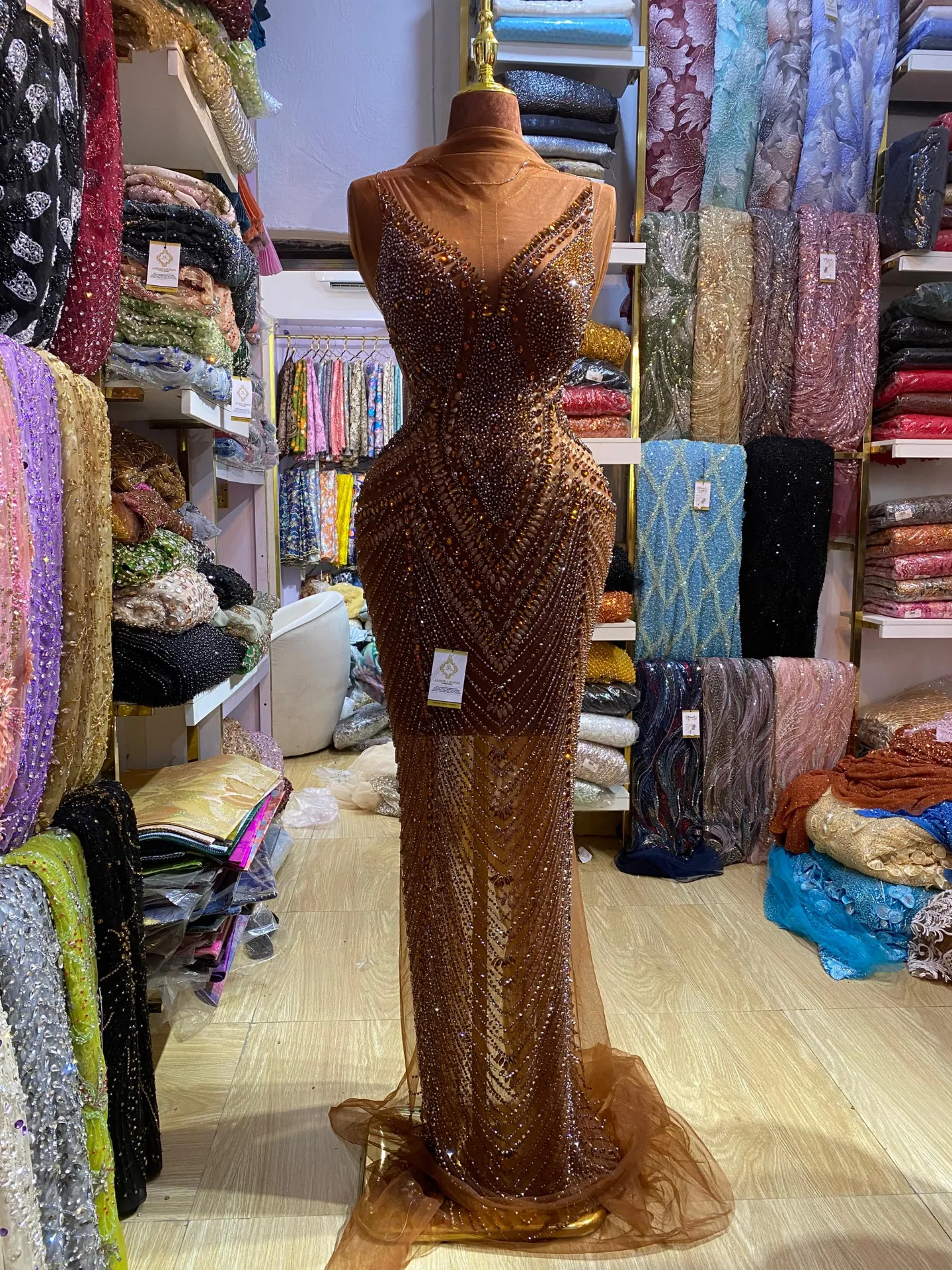
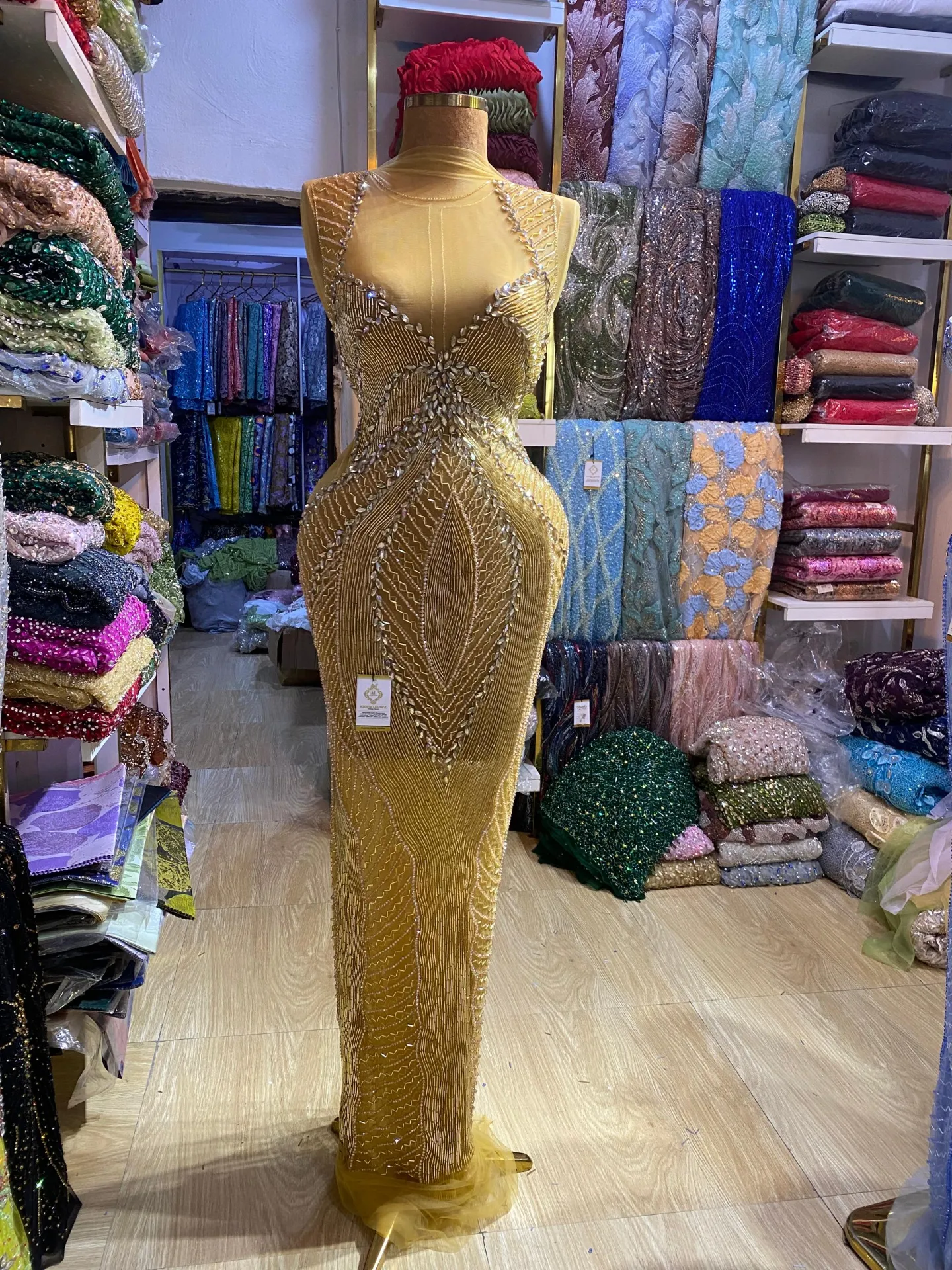
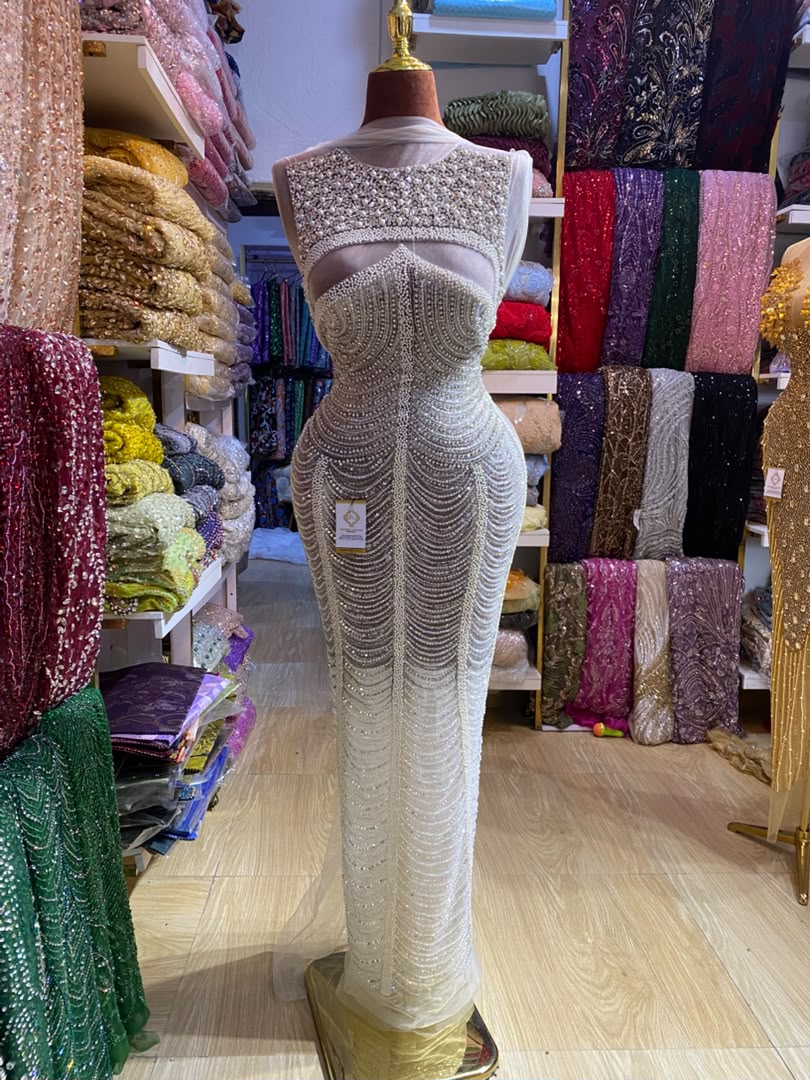
Flattering Panel Fabrics for Curvy Silhouettes
Recreate the editorial look with curated Darlings Fabrics picks.
Shop Collection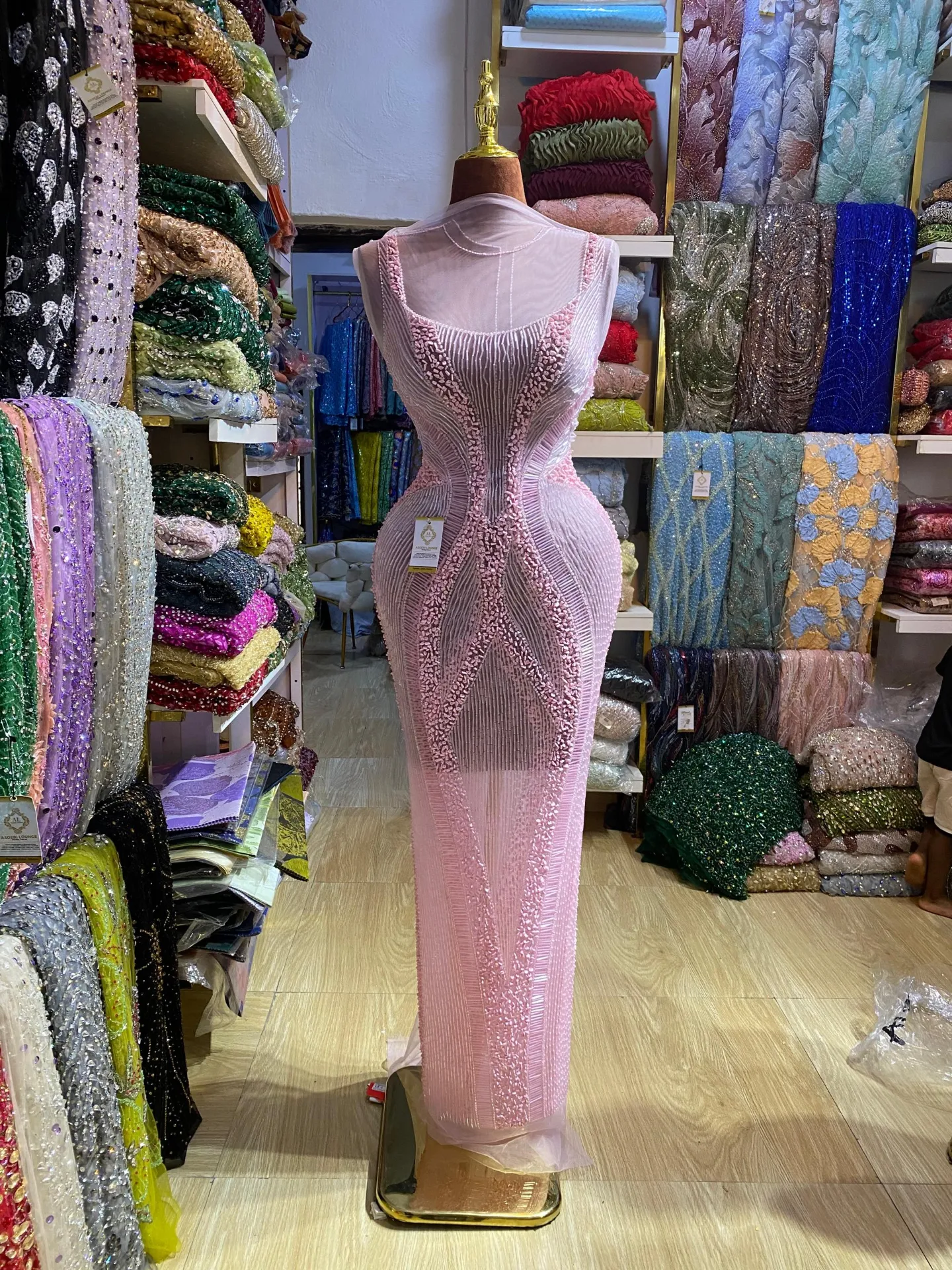
4. Body-Shape Styling Matrix: Apple, Pear, Hourglass
Tailoring Recommendations by Body Shape
- The Pear Shape (Fuller hips & thighs, narrower bust): Focus on panels with dense, intricate shoulder and neckline beading. This draws visual attention upward to balance the hips. Use illusion side godets starting at the knee for a dramatic trumpet flare.
- The Apple Shape (Fuller bust & midriff, slimmer legs): Choose panel fabrics with strong, vertical, linear crystal trails through the midsection. Avoid horizontal border motifs near the natural waist.
- The Hourglass Shape (Balanced bust & hips with defined waist): Let the panel follow your natural silhouette. An off-shoulder sweetheart neckline paired with a fitted mermaid flare emphasizes your waistline.
5. Five Red Flags: Your Tailor Does NOT Know How to Grade a Panel
Watch Out for These Warning Signs
- Warning 1: They tell you to buy 5 yards of running lace instead because "panels are only for slim girls."
- Warning 2: They cut straight through the central chest embroidery to insert a zipper.
- Warning 3: They do not own or use spiral steel boning and rely on cheap plastic tape.
- Warning 4: They refuse to do a mockup toile fitting in plain fabric before cutting your panel.
- Warning 5: They suggest hemming the gown from the bottom edge to adjust for your height.
Frequently Asked Questions
Frequently Asked Questions on Plus-Size Panel Styling
Will panel dress fabric make a plus-size woman look wider or bulkier?
Quite the opposite. Because panel fabrics feature vertically oriented, graduating motifs that draw the eye upward from the hem toward the neckline, they have a natural elongating and slimming visual effect compared to dense, horizontal, all-over prints that add visual width.
Can I add sleeves if the panel only has body motifs?
Yes! Most luxury panel cuts include coordinating border strips specifically meant for sleeves, cuffs, or necklines. If additional sleeve fabric is needed, matching stretch mesh or plain illusion tulle is inexpensive, breathable, and coordinates seamlessly.
What shapewear should I wear under a panel dress?
Wear a high-waisted seamless mid-thigh shaper with open-bust design so it does not interfere with the built-in bra cups of your gown. Put on your shapewear during every tailor fitting so the dress is sculpted to your exact shaped measurements.
Can a UK size 22 wear a mermaid silhouette?
Yes, with absolute elegance! The secret is the "knee break point." For curvy figures, ensure the mermaid flare begins 2 inches above the knee rather than at the mid-calf. This elongates the legs and allows comfortable stride length.
Is it cheaper to buy two panels or one panel plus plain fabric for side inserts?
Buying one panel plus 1 to 1.5 yards of matching Duchess satin or illusion tulle for side godets is significantly more cost-effective. However, for bridal celebrants who want unbroken heavy beading across both front and back, two panels provide ultimate luxury.
How do I ensure the sheer illusion net matches my skin tone?
Darlings panel fabrics are imported on versatile warm-caramel and nude-illusion mesh that blends with melanin skin tones. If your skin is deep espresso or fair, your tailor can tint the illusion net with textile dye or back it with exact skin-tone stretch mesh.